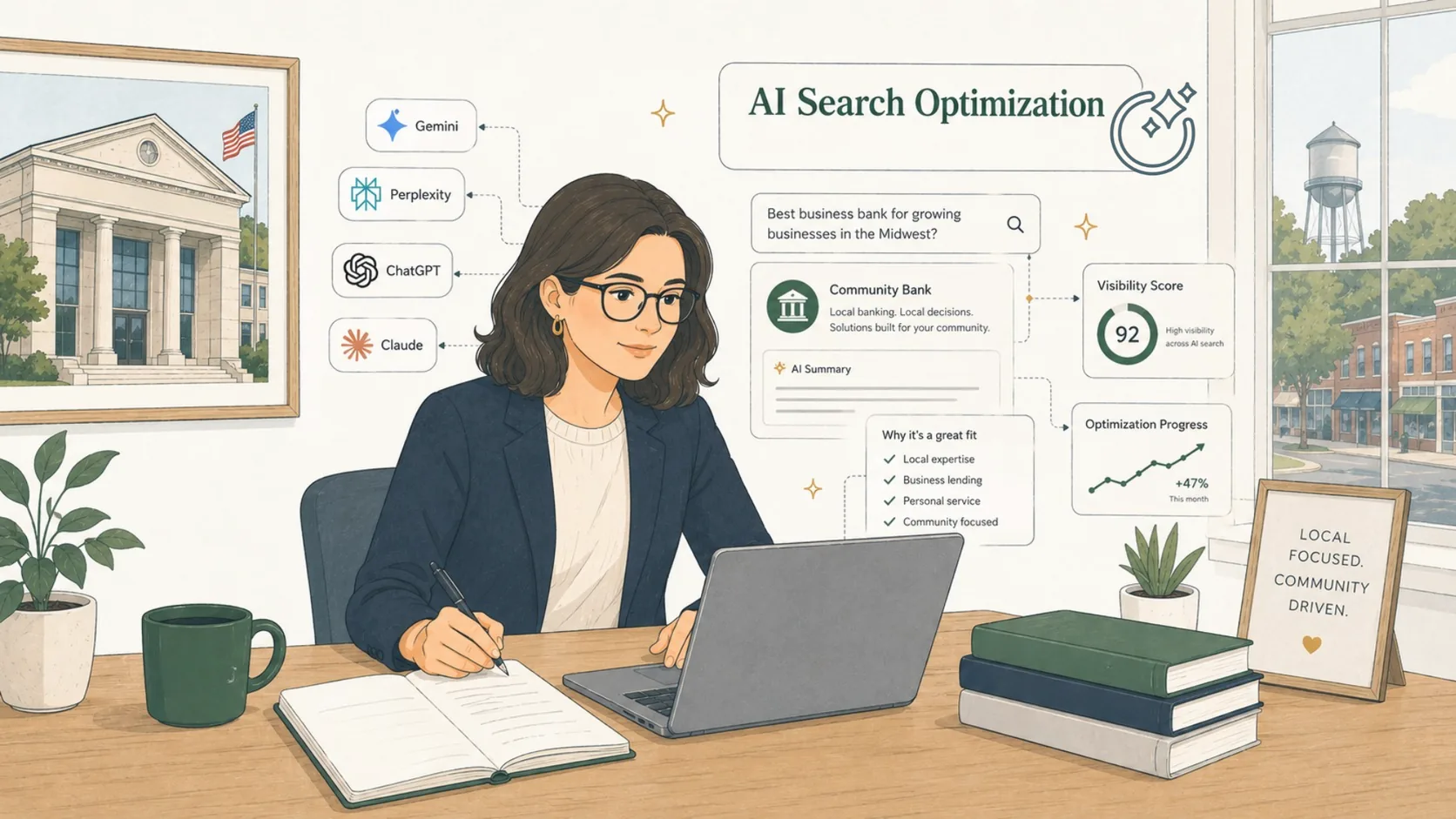

How ChatGPT Finds Information About Your Financial Firm

Suppose an investment advisor asks ChatGPT what a fund charges, how its managers choose investments, and what its largest holdings are.

A useful answer needs to bring together several pieces of information. The fees must apply to the right share class, the investment process needs a clear explanation, and the holdings should reflect the latest information published by the fund provider. An older profile might list a fee that has since changed, while a third-party publisher could report portfolio holdings from several months ago.

For the asset manager behind that fund, this raises a practical question: where will ChatGPT get the information?

The short answer: ChatGPT generates responses using patterns learned during training and information available in the conversation. It also searches the web, either automatically or at the user’s request; some queries don’t require a web search. Connected apps can also provide additional sources of information, depending on the connections and permissions in place. The information ChatGPT uses depends on the request and available features.

Key takeaways

  • ChatGPT uses several information sources. These include patterns learned during training, conversation context, and information retrieved through web search or connected apps.
  • Your website is one potential source. Search answers may also draw on third-party publishers, making it useful to review how your firm is described elsewhere.
  • Training and search crawlers have different jobs. You can block GPTBot while allowing OAI-SearchBot to access your website for ChatGPT search.
  • Make your information easy to understand and verify. Publish current product details, answer customer questions, and support your firm’s strengths with evidence. Include key information in text alongside videos and charts.
  • Monitor how your firm appears. Test relevant questions, review descriptions and cited sources, and identify gaps, factual errors, or outdated information.

Where does ChatGPT get its information?

The models behind ChatGPT are developed using three broad sources: publicly available internet information, material accessed through third-party partnerships, and information provided or generated by users, human trainers, and researchers.

During training, the model learns patterns by adjusting its numerical parameters. Some training processes also use synthetic data, as explained in OpenAI’s overview of model development.

Information can also come from uploaded files and connected apps, subject to the access and permissions available. Memory, when enabled, can contribute relevant context. Whether that information may also be used to improve models depends on the service and data settings.

Consider an investment advisor who uploads a fund’s fact sheet or investment deck that has an explanation of its investment process and its recent holdings. The advisor has supplied material ChatGPT can use to answer questions about the fund. Someone asking the same questions without those documents uploaded has given it a different starting point. In the latter case, ChatGPT may use search to locate relevant information.

What happens when ChatGPT searches the web?

As mentioned, ChatGPT can search the web automatically or at a user’s request. In managed workspaces, administrators can control access to search through settings and permissions.

When search is used, retrieved information helps shape the answer, which includes links to sources. The model still has to interpret the material and generate a response.

The wording entered by the user may differ from the query sent to a search provider. When working with search partners, ChatGPT typically reformulates a request into targeted queries. Initial results can lead to further searches, and relevant saved memories and location information may influence the queries.

In our hypothetical fund example, it may find the information from the fund provider’s website, or it could find it from third-party publishers. For the fund company this opens up the firm to a certain type of information risk. The third-party publisher could mislead the user with incorrect information or negative bias. That is why it is crucial for the fund provider to ensure its content is the primary source ChatGPT draws its information from when answering queries related to the firm. If it doesn’t, it loses control of the narrative.

For a financial marketer, this is why you must build content around the substance of your customers’ questions. A fund page should help someone understand what the fund costs, how it invests, and what it holds, with the relevant share class, reporting dates, and supporting documents clearly identified.

The same applies to other types of financial firms. For a bank, a business owner might ask ChatGPT which bank is the best for their transaction needs. A useful answer would depend on the monthly fee, included transactions, and additional charges. For the bank, publishing a clear comparison of its accounts would help ChatGPT understand the differences and check the details, increasing the chances it shows up in ChatGPT answers.

How does ChatGPT choose a source?

ChatGPT ranks search results using several factors intended to find relevant, reliable information. The public guidance does not disclose the full ranking formula or say that one type of website always takes priority.

The source needs to fit the question. A fintech firm’s current documents and website can help verify its services and fees, while a regulator’s website is a sensible reference for a query about a rule.

For financial firms, our recommendation is to publish specific information about the subjects they know directly. Explain how your products and services work, who they are intended for, and what the relevant conditions are. Give readers supporting material they can check.

GPTBot and OAI-SearchBot: What are they and what do they do?

OpenAI’s crawler documentation explains the roles of three relevant agents:

AgentDocumented purpose
GPTBotCrawls content that may be used to train OpenAI’s foundation models.
OAI-SearchBotCrawls for ChatGPT’s search features.
ChatGPT-UserVisits pages for certain user-initiated actions, rather than automatic web crawling.

Your firm can allow ChatGPT’s search crawler while blocking its training crawler. These choices are managed separately through robots.txt, a file that gives crawlers instructions about accessing your website.

To make your content eligible for ChatGPT search, ask your web team to allow OAI-SearchBot and check that your hosting and security settings permit traffic from OpenAI’s published searchbot IP addresses.

Blocking OAI-SearchBot excludes your website’s content from ChatGPT search answers. However, ChatGPT may still display a link to help someone find your website, such as when they ask for your firm’s web address.

ChatGPT-User works differently. It visits pages in response to certain user requests, and robots.txt rules may not apply to those visits. For example, someone might ask:

“Open this RIA’s website [URL] and explain how it manages client portfolios, what financial planning services it offers, and how it charges clients.”

ChatGPT-User may be used for the page visit involved in answering that request.

Can ChatGPT use PDFs, images, and video?

It depends on how the content is provided and which features are available.

OpenAI’s training-data summary lists text, images, audio, and video among its training materials. For uploaded files, support for images inside documents depends on the plan and file type.

A web search works differently. Finding a page with a video does not mean ChatGPT has watched it. You also should not assume it has interpreted every chart inside a PDF.

For financial firms, we recommend publishing the key information in readable text alongside the media. For example:

  • Add an accurate summary or transcript to a portfolio manager’s interview about the investment process.
  • Explain what a chart shows, including its reporting period and source.
  • Add a written walkthrough alongside a fintech app demo, explaining the features and steps shown in the video.

How can financial firms optimize for ChatGPT?

Your firm can improve the information available about it and make that information easier to access. The practical aim is to help ChatGPT find relevant material and describe your firm’s offerings and strengths accurately.

We recommend starting with an important product or service page. Check whether a reader can understand the offering, decide whether it fits their needs, and verify the information. Then work through the following areas.

Make product and service information clear

For an asset manager, identify the fund and relevant share classes. Explain its fees and investment process, date of the recorded holdings, and link to supporting documents.

For an RIA or wealth-management firm, explain who the firm serves, how it manages portfolios, and what the relationship includes. Make fees, account minimums, and the scope of any financial planning services clear.

For a bank or credit union, present account rates alongside the fees and conditions that apply. Explain membership or account eligibility, how long promotional offers last, and what happens afterward.

For a fintech firm, explain what the service does, who can use it, and how pricing works. Describe relevant limits, such as supported countries, account types, or transaction restrictions.

Answer the questions people actually ask

Use questions from your distribution, advisory, and customer-service teams to plan your financial content.

Answer the main question early, then explain the conditions and supporting details. Use descriptive headings so readers can find what matters to them.

Keep the reader’s decision in mind. Someone comparing funds needs different information from someone deciding whether to hire an RIA or open an account.

Back up your firm’s strengths

Make the reasons to consider your firm specific and verifiable.

If your RIA specializes in serving business owners, explain the planning services you provide and the team’s relevant experience. If your fintech platform simplifies a process, show the steps involved and explain what the user needs to do.

Publish accurate team biographies, explain relevant qualifications, and support factual claims with documents or reliable references. This gives readers evidence for the qualities you want associated with your firm.

Keep public information up to date

Assign someone responsibility for maintaining each important page. When a fee, rate, product feature, or service changes, update the other pages that mention it too.

Put dates beside information that changes over time. Clearly label historical material so readers can distinguish an older article from a current product description.

Review relevant company profiles and directory listings as well. Correct outdated information wherever you can update it. If another publisher has made a factual error about your firm, request a correction.

This work should cover the information a prospective client might encounter beyond your own website.

Check website access and track results

Ask your web team to check crawler permissions and hosting restrictions. Make important public pages easy to reach through internal links, and keep confidential information behind appropriate access controls.

When testing ChatGPT, review whether your firm appears, how it is described, and which sources support the answer. Record the question, date, and sources shown. Look for recurring factual errors and review the pages or profiles being cited. Finpact’s Answer Engine Optimization (AEO) and Generative Engine Optimization services can help with that. Finpact AI Answer Share, our proprietary visibility tool, provides a detailed breakdown of how different AI tools source information and talk about your firm.

Keep SEO foundations in place

Search engine optimization (SEO), answer engine optimization (AEO), and generative engine optimization (GEO) involve different search experiences. Our approach to each starts with information that readers can find, understand, and verify.

For Google’s AI Overviews and AI Mode, established SEO practices still apply. No special AI markup or schema is required. Important content should be available in text, and structured data should match the information visible on the page.

That guidance applies to Google’s features. For ChatGPT, the crawler settings explained earlier provide a practical starting point, alongside the publishing recommendations above.

Choose the pages most likely to influence a decision. Make the case for your firm clearly, support it with evidence, and assign responsibility for keeping it accurate.

Frequently asked questions

Does ChatGPT search the internet for every answer?

No. ChatGPT can answer using patterns learned during training and available conversation information. It can search automatically or at the user’s request when search is available.

Can a website block GPTBot while allowing ChatGPT search?

Yes. GPTBot and OAI-SearchBot have separate controls. You can block GPTBot while allowing OAI-SearchBot, although allowing search access does not guarantee inclusion.

Does updating a website immediately update ChatGPT’s trained knowledge?

No. Updating a website does not retrain the model. Search may retrieve the updated information, but publishing it does not guarantee that ChatGPT will find or use it.

Can ChatGPT use information behind a login?

It can, through supported connections that provide authorized access. What it can retrieve depends on the connection, account permissions, and workspace settings.

How can I check how ChatGPT describes my firm?

Test questions your prospective clients or customers might ask. Review whether your firm appears, how its products and services are described, and which sources are cited. Record the results over time to identify missing information, factual errors, or outdated descriptions.


Discuss your firm’s search strategy

Contact Finpact Media to discuss how your website and content can better support search and AI discovery.

About the author

Devon Krogh, CFA. Devon brings over a decade of experience in financial services, combining technical expertise with an in-depth understanding of investor needs and industry dynamics. As a CFA® charterholder, he provides a unique perspective on how financial firms can communicate with credibility, clarity, and compliance in a highly regulated industry.

“High Net Worth” Is Not a Marketing Persona

Imagine three prospective clients with similar levels of investable assets. One is preparing to sell a business. Another receives a substantial share of compensation in company stock. The third has just retired and needs to start drawing income.

In a database, they might belong to the same segment. In a meeting with a financial advisor, their conversations would diverge almost immediately.

Yet a website headline such as “Sophisticated wealth solutions for high-net-worth individuals” could be aimed at all three. It tells them who qualifies, but gives them little reason to believe the firm understands their particular problem.

High net worth is a financial classification. A wealth management marketing persona describes a client’s situation, priorities, concerns and reasons for seeking advice. Investable assets help establish commercial fit. They cannot explain, on their own, why someone would choose your firm.

That distinction should shape what appears on your website, which campaigns you run and what you send after someone expresses interest.

Key takeaways

  • “High net worth” is a financial category, not a complete marketing persona. Investable assets help establish eligibility, but they reveal little about why someone needs advice or would choose your firm.
  • Build personas around the decisions clients face. Selling a business, managing concentrated company stock and creating retirement income call for different messages, content and offers.
  • Keep the client’s need consistent across your marketing. Your website, campaign resources and follow-up emails should develop the subject that first attracted the prospect’s interest.
  • Specific client questions give search content a clear purpose. Support SEO, AEO and GEO efforts with direct answers, credible sources and evidence of relevant expertise.
  • Measure which inquiries become suitable client relationships. Track campaign sources, attended meetings and new clients. Use those results to refine your personas and identify the audiences your firm serves well.

Why wealth bands fall short as a marketing strategy

In its World Wealth Report 2026, Capgemini reports that 97% of wealth management firms use wealth bands as their primary basis for client segmentation. Only 17% of high-net-worth individuals described their wealth advisory experience as seamless and personalized.

Wealth bands have legitimate uses. They can help a firm set account minimums, allocate service resources and assess whether a relationship fits its business model.

The problem begins when that operating category becomes the entire audience brief. “People with $1 million to $5 million to invest” gives a marketer a financial threshold. It leaves the motivation for seeking advice largely unexplained.

A business owner might be thinking about what life will look like after a sale. An executive might be wondering how much of the family’s future depends on their company’s stock. A retiree might need reassurance about spending money accumulated over decades.

Those differences give the marketing team something useful to work with.

What should a wealth management persona include?

A useful persona should help your team decide what to write, what evidence to show and what next step to offer.

Build it from client interviews, anonymized discovery notes, recurring prospect questions and the reasons people give for hiring your firm. Look for patterns in the circumstances that brought them to you.

For each priority audience, establish:

  • The trigger: What has changed, or is about to change, that makes advice relevant?
  • The immediate decision: What does the person need to work out?
  • The hesitation: What makes them reluctant to act or trust an advisor?
  • The evidence they need: Which experience, process or explanation would help them assess your firm?
  • The appropriate next step: Are they researching, comparing advisors or ready for a planning conversation?

Keep asset level, location and service eligibility alongside this information. They remain useful qualification criteria.

The result should be specific enough to change a marketing decision. “Values trust and excellent service” offers little direction. “Wants to understand how a wealth advisor would coordinate with the accountant before a business sale” suggests a page topic, evidence to include and a reason to book a meeting.

Three audience profiles, three different messages

The following examples are illustrative profiles and campaign concepts, not client case studies.

Client situationDecision driving interestSample messageRelevant campaign offer
Business owner considering a saleHow can I minimize taxes on the sale, and what should I consider before selling my company?Plan for the tax implications of your business sale and what comes next.A guide to the tax and financial considerations of selling a business, with a planning consultation.
Executive with a growing company-stock positionHow do equity compensation, cash needs and investment concentration fit together?Make your company equity part of a broader financial plan.A guide to the risks of highly concentrated equity positions and strategies for reducing risk. Along with a consultation with an investment specialist.
New retiree beginning portfolio withdrawalsHow can accumulated investments support spending through retirement?Build a retirement income plan around the life you want to live.A retirement income checklist and a planning meeting.

Each message names a recognizable situation and a piece of work a potential client may need help with. The firm must then substantiate that promise through relevant experience and a clear explanation of its service.

These categories can overlap. A business owner may also be preparing for retirement. An executive’s priorities may change after leaving an employer. Allow people to express more than one interest, and update their profiles in your CRM as circumstances change.

Segmentation should make the next conversation more informed. It should leave room for the person to be more complicated than the category.

Organize your website around the decision

A prospect should be able to recognize their situation before they understand your firm’s internal service structure.

Alongside information about investment management, financial planning and fees, create clear routes for the situations your team is equipped to serve. For example, planning a business sale, managing equity compensation or preparing for retirement.

Each audience page needs substance that changes with the situation. On a business-sale page, for example, explain:

  • Which personal planning questions your team helps owners address.
  • How you work with the client’s accountant, lawyer and other advisors.
  • What relevant experience your team can demonstrate.
  • What the first conversation covers and how to prepare for it.

Link that page to a useful supporting article, then offer a next step that matches the subject. “Discuss your pre-sale planning questions” sets a clearer expectation than an unexplained invitation to get in touch.

Keep account minimums and service areas easy to find. Relevance brings the prospect closer; clear eligibility helps them judge whether the relationship makes sense.

This is where website strategy and development becomes part of audience strategy. The page structure determines whether visitors can find the expertise your firm wants to be known for.

Carry the same situation through campaigns and email

If a person clicks an ad about retirement income, the landing page and follow-up should focus on how their savings will support their spending in retirement.

A campaign might lead to a checklist that helps them organize questions about income sources, spending needs and portfolio withdrawals. For subscribers who want further information, an accompanying email sequence could develop the subject:

  1. Where will your retirement income come from? Help the reader identify expected income sources and the spending their investments will need to cover.
  2. How could market declines affect your withdrawals? Explain the risks of drawing from a portfolio during a downturn and the approaches your team can discuss to manage those risks.
  3. What would a retirement income consultation cover? Show how your team would assess their income needs, explain what information to bring and invite the reader to book a meeting.

The sequence gives the potential client a progressively clearer understanding of the work. It also gives the advisor a useful starting point if that person requests a meeting.

An executive’s follow-up should develop questions about company equity. A business owner’s should explore the tax and financial considerations of a sale. A general market newsletter can still have a place, but it serves a different purpose from a campaign built around an immediate planning need.

Effective content marketing keeps the article, offer and follow-up focused on the financial problem the reader needs help solving.

Specific client questions also create better search content

A broad audience brief tends to produce broad article ideas. A situation gives the writer a question to answer.

For the business-owner audience, a possible title is “What should you ask a financial advisor before selling your business?” That title identifies a specific reader and the decision they are facing. It also creates a clear obligation for the article to deliver useful answers.

This approach supports search engine optimization (SEO), while giving answer engines and generative systems passages they can interpret in context. Answer engine optimization (AEO) and generative engine optimization (GEO) build on that clarity and the quality of the underlying information.

Answer the main question early. Use descriptive headings, explain the scope of the advice and support factual claims with current primary sources. Show who wrote or reviewed technical material and why they are qualified to do so.

Google’s guidance on AI features in Search says established SEO practices remain relevant to AI Overviews and AI Mode. It calls for helpful, reliable content and accessible pages, with no special additional optimization required for those features.

Our guide to AEO and GEO for wealth and asset management explores the broader content and technical foundations. Audience specificity gives that work a subject worth developing.

Measure whether the right conversations follow

A more focused campaign may generate fewer inquiries and still bring in more clients whose needs match your firm’s expertise.

Track the service need that prompted each inquiry alongside its campaign source. Then follow the prospect’s journey. Do they attend a meeting and eventually become a client? If so, you have evidence that the campaign is attracting relevant prospects and helping turn their interest into client relationships.

Compare results over similar follow-up periods, while accounting for differences in how quickly people need advice. An owner exploring a future sale and a retiree seeking an immediate income plan may move at different speeds. Be cautious about drawing conclusions from conversion rates based on only a handful of inquiries.

Our article on why financial firms should stop chasing the cheapest lead explains how to connect campaign reporting to qualified conversations and acquisition costs.

Use those outcomes to refine the persona so it better reflects the needs and circumstances of the clients your firm serves well.

Frequently asked questions

What is needs-based segmentation in wealth management?

Needs-based segmentation groups clients or prospects by the problems they need help solving, such as planning a business transition, managing company equity or creating retirement income. It adds decision-making context to financial criteria such as investable assets.

Should wealth managers stop using asset minimums in their marketing?

No. Clearly stated minimums help prospects assess eligibility. Use them to explain who your firm can serve, alongside messaging that explains which needs your team is equipped to address.

How many marketing personas does an advisory firm need?

Begin with the smallest set that changes your content, offers and follow-up in useful ways. Two or three well-supported audiences can be a practical starting point. Add another when client evidence and service capabilities justify a distinct approach.

Can a smaller advisory firm personalize content without complex software?

Yes. Start with a focused audience page, a relevant resource and an email sequence for subscribers interested in that subject. Keep an organized record of stated interests and inquiry outcomes. More sophisticated automation becomes useful when the volume and complexity warrant it.

Start with the client’s next decision

Start with one client need your firm knows well, such as creating retirement income. Follow the steps a potential client would take, from clicking an ad to visiting your website, receiving a follow-up email and booking a meeting. At each step, make it clear how your firm can help with that need and what the person should do next.

If your firm is reviewing its audience strategy, website or campaigns, talk to Finpact Media about turning those client situations into a clearer marketing approach.

The three prospects may all meet your minimum. They still need three different reasons to call.

Is your marketing speaking to a wealth band or a decision?

Finpact Media helps wealth managers build websites, campaigns and content around the situations their clients are actually in.

About the author

Devon Krogh, CFA. Devon brings over a decade of experience in financial services, combining technical expertise with an in-depth understanding of investor needs and industry dynamics. As a CFA® charterholder, he provides a unique perspective on how financial firms can communicate with credibility, clarity, and compliance in a highly regulated industry.

Why Financial Firms Should Stop Chasing the Cheapest Lead

The best financial services lead generation campaigns produce qualified conversations and clients at a sustainable acquisition cost. Cost per lead matters, but it cannot tell you whether prospects fit your firm, attend meetings, or become profitable client relationships. Measure those outcomes before deciding which campaign deserves more budget.

Key takeaways

  • A lower cost per lead does not automatically mean a better campaign. Financial firms should assess whether inquiries become qualified conversations and clients at a sustainable acquisition cost.
  • Lead quality depends on fit and intent. A qualified prospect has a need the firm can address, fits its service model, and demonstrates relevant interest.
  • More expensive leads can produce better results. A higher lead-to-client conversion rate can offset a higher cost per lead and reduce ad spend per acquired client.
  • Track what happens after the inquiry. Measure lead qualification, sales acceptance, meeting attendance, and client conversion alongside cost per lead.
  • Connect campaign reporting to client outcomes. CRM records and eligible offline conversion tracking help identify which campaigns generate meaningful business opportunities.
  • Compare campaigns consistently. Use comparable groups of leads, allow sufficient time for conversion, and consider how follow-up affects the results.

Your latest campaign report looks promising. Lead volume is up. Cost per lead is down. The dashboard suggests your marketing is becoming more efficient.

Then you speak to the people following up.

Some prospects wanted a free resource. Others need a service you do not offer. Several booked a consultation and never attended. Your team has more names to contact, but the number of meaningful conversations has barely changed.

This is the difference between generating an inquiry and generating a business opportunity. For financial advisors, wealth managers, insurance brokers, and mortgage brokers, closing that gap should shape how campaigns are built and measured.

Why a low cost per lead can be misleading

Cost per lead, or CPL, measures how much you spend to generate an inquiry. In a paid campaign, it is typically calculated by dividing ad spend by the number of leads attributed to that campaign.

It is a useful efficiency metric. It is also an incomplete one.

A retirement guide download and a request to discuss retirement planning represent different levels of intent. If both appear as equally valuable leads, the campaign generating the cheapest downloads can look stronger than the campaign generating serious inquiries.

There is a similar problem when reports count duplicate submissions, existing clients, or inquiries with invalid contact details as new prospects.

Low-cost leads are valuable when they convert economically. The mistake is assuming that a lower CPL proves they will.

That is why Finpact’s approach to paid advertising for financial firms includes defining success through qualified leads, meetings, and business outcomes.

What makes a financial services lead qualified?

A qualified lead is a prospect who meets your firm’s agreed criteria for a potential client relationship and has demonstrated relevant interest. A form submission alone does not establish either condition.

The criteria should reflect the service you provide:

  • Financial advisors and wealth managers: A relevant planning need, fit with the firm’s service model, and interest in discussing advice.
  • Insurance brokers: A coverage need the brokerage can address, a suitable service location, and a meaningful reason to seek a quote or review.
  • Mortgage brokers: A relevant financing need, a location the brokerage serves, and a purchase or refinancing timeline.

Marketing qualification is an initial assessment. It does not replace suitability checks, underwriting, or lending decisions.

Agree on these definitions with the people responsible for follow-up. Then distinguish a qualified lead from a sales-accepted lead, meaning a prospect the advisor or sales team has reviewed and agreed to pursue.

Google makes a related distinction between qualified leads and converted leads. Qualified leads have been assessed in a CRM or internal system; converted leads have completed a business-defined step. That step does not automatically mean a paying client, so name your outcomes precisely.

Which metrics should financial firms track beyond CPL?

Build a report that follows prospects from inquiry to client. These measures show where interest becomes a real opportunity and where the process breaks down.

MetricCalculationWhat it helps you assess
Lead qualification rateQualified leads ÷ unique new leadsHow closely inquiries match your criteria
Sales acceptance rateSales-accepted leads ÷ qualified leads passed to salesWhether marketing and sales agree on fit
Meeting attendance rateFirst meetings attended ÷ first meetings bookedWhether bookings become conversations
Cost per qualified meeting attendedAd spend ÷ qualified first meetings attendedThe advertising cost of a relevant conversation
Lead-to-client conversion rateNew clients ÷ unique new leadsHow frequently inquiries become clients
Ad spend per acquired clientAd spend ÷ new clients attributed to the campaignThe campaign’s advertising acquisition cost
Fully loaded client acquisition costTotal acquisition-related sales and marketing costs ÷ new clientsThe broader cost of winning business

Multiply the rate calculations by 100 to express them as percentages. Use consistent definitions and matching groups of leads throughout.

Ad spend per acquired client gives you a clearer view of campaign efficiency. It shows how much advertising budget is needed to turn inquiries into new client relationships. Use it alongside lead quality, meeting attendance, and conversion rates to understand which campaigns are producing meaningful results.

Then consider the value of the clients each campaign attracts, including their fit with your services and the revenue those relationships can generate over time. Ad spend per client measures advertising efficiency, while total client acquisition cost provides a broader view of the business.

A hypothetical comparison of cheap leads and better conversion

Consider two campaigns promoting the same financial service.

This example is entirely hypothetical. These figures are not Finpact client results or industry benchmarks. All amounts are in USD. Both campaigns use the same attribution method and have had equal time for leads to progress. Meeting counts represent unique prospects, with repeat appointments excluded.

Campaign measureCampaign ACampaign B
Ad spend$6,000$6,000
Unique new leads20060
Cost per lead$30$100
Qualified leads4036
Sales-accepted leads3030
Qualified first meetings booked2024
Qualified first meetings attended1020
Meeting attendance rate50%83.3%
New clients25
Ad spend per qualified meeting attended$600$300
Ad spend per acquired client$3,000$1,200

Campaign A wins on CPL. Its leads cost $30 each, compared with $100 for Campaign B.

Campaign B, however, produces twice as many qualified conversations and 2.5 times as many clients from the same advertising budget. Its ad spend per acquired client is 60% lower.

The difference comes from what happens after the inquiry. Campaign B qualifies a larger share of its leads, turns more accepted prospects into bookings, and gets more of those prospects into meetings.

Campaign B therefore performs better on advertising acquisition cost in this example. Determining which campaign is more profitable still requires the full sales and marketing costs and the economics of the clients acquired.

How to improve lead quality and campaign measurement

Make the offer and landing page specific

Tell prospects who the service is for, what it helps them address, and what happens after they inquire.

A financial advisor offering retirement planning should make that service clear. An insurance brokerage promoting commercial coverage should make it easy to understand which businesses it serves. A mortgage consultation page should explain the purpose of the first conversation.

Add a small number of useful qualification questions, such as service needed, location, or timing. Test their effect on qualified meetings and clients. More form fields do not automatically produce better leads.

This is where financial website and landing page development connects directly to campaign performance. The page needs to help suitable prospects understand the offer and take the next step confidently.

Give each lead a clear owner and next step

Lead quality and follow-up quality affect the same results.

A promising inquiry can stall if nobody owns it, the response arrives too late, or the prospect does not understand the meeting they booked.

Set a response standard your team can meet. Assign each inquiry, confirm the purpose of the meeting, and make rescheduling straightforward. Record rejection and loss reasons in the CRM, such as wrong service, unsuitable timing, unreachable prospect, or no-show.

Those reasons tell you whether to change the campaign, the landing page, or the follow-up process.

Connect campaign data to CRM outcomes

A customer relationship management system, or CRM, should retain each prospect’s campaign source alongside qualification status, meeting outcomes, and the eventual client result.

For Google Ads, offline conversion imports can connect ad interactions with later outcomes, including sales completed over the phone or in an office. Google’s guidance recommends enhanced conversions for leads for new implementations, using eligible first-party information to improve matching.

The practical goal is to understand which campaigns produce qualified opportunities and clients. Use your CRM and financial records to verify actual business outcomes, and investigate discrepancies with platform reporting.

For enhanced conversions, Google’s customer data policies require appropriate disclosures and consent where required. They also prohibit sensitive-category conversion information, including information indicating low credit ratings or high debt loads. Review both the data and the conversion event for eligibility before sharing them. Hashing identifiers does not remove those restrictions.

Choose a meaningful optimization goal

Track form submissions, qualified leads, and acquired clients separately.

Google’s offline conversion guidance recommends separate conversion actions for different funnel stages and says advertisers would usually bid toward one stage.

Choose a stage close enough to business value to be useful, with sufficiently frequent and reliable data to support optimization. For a firm that signs clients infrequently, a consistently defined qualified lead may provide a more timely signal than a closed-client event.

Continue measuring the eventual client outcome. An improvement in qualified leads needs to translate into better acquisition economics over time.

Compare campaigns on a fair basis

Group leads by when they were acquired and give each group a comparable period to convert. This is a cohort comparison, and it helps avoid judging a new campaign against an older campaign whose leads have had months to progress.

Also check whether campaigns promote comparable services, reach new prospects or existing audiences, and receive similar follow-up.

Separate missing CRM updates from confirmed losses. Look at volumes alongside percentages, since a handful of client wins can produce unstable conversion rates. Attribution helps assign credit, but it does not by itself prove that every attributed client was caused by advertising.

Frequently asked questions

What is a good cost per lead for financial advisors?

A useful CPL target depends on your lead-to-client conversion rate and acquisition economics. For example, a hypothetical $50 lead converting to a client at 1% implies $5,000 in ad spend per client. A $150 lead converting at 10% implies $1,500. Neither figure includes other sales and marketing costs.

Are more expensive leads always better?

No. Higher prices can reflect greater competition or inefficient campaigns. More expensive leads justify their cost only when conversion rates and client economics support it. Assess qualified conversations, acquired clients, and total acquisition cost before increasing spend.

Should financial firms stop tracking cost per lead?

No. CPL remains useful for monitoring advertising efficiency and spotting changes. Read it alongside qualification, sales acceptance, meeting attendance, and client conversion. A falling CPL is encouraging when those downstream results remain healthy or improve.

Can a smaller firm measure lead quality without a complex CRM?

Yes. Start with a secure, consistently maintained record of lead source, inquiry date, qualification, follow-up owner, meeting outcome, and client status. The priority is complete and reliable information. A CRM becomes more useful as lead volume, reporting needs, and team handoffs increase.

Build your campaign around the client relationship

A useful campaign report should help you decide where to invest next. Tracking qualification, meeting attendance, and client conversion gives your firm a clearer picture of what its advertising budget is producing.

Not sure which campaigns are actually working?

Finpact Media builds paid campaigns for financial firms around qualified conversations and client outcomes.

About the author

Devon Krogh, CFA. Devon brings over a decade of experience in financial services, combining technical expertise with an in-depth understanding of investor needs and industry dynamics. As a CFA® charterholder, he provides a unique perspective on how financial firms can communicate with credibility, clarity, and compliance in a highly regulated industry.

AEO and GEO for Wealth and Asset Management: How to Optimize Content for Search and AI Visibility

The next competition for investor attention may be decided before a prospective client reaches your website.

Key takeaways

  • Answer Engine Optimization (AEO) and Generative Engine Optimization (GEO) build on Search Engine Optimization (SEO). They extend an established search strategy into direct and AI-generated answers rather than replacing traditional search optimization.
  • Content should be organized around the questions and decisions facing clients, investors and investment committees.
  • Clear answers, question-based headings and comprehensive resources make financial content easier for people and AI systems to understand.
  • Trust is essential in financial services. Qualified authorship, primary-source citations, balanced claims, compliance review and regular updates all support visibility.
  • Performance should be measured across traditional search, AI-generated answers, audience engagement and the ongoing accuracy of published content.

Not long ago, someone looking for a wealth manager followed a predictable path. They asked a friend for a recommendation, searched for the firm and opened several websites. Then they compared investment philosophies, services and credentials.

Now consider what happens when that same person asks an AI tool a question:

“What should I look for in a wealth manager if I am five years from retirement?”

The response may compare fees, fiduciary responsibilities, retirement-income strategies and tax planning. It may also cite several firms as sources.

The prospective client could form an opinion before visiting any of their websites.

That is the shift wealth and asset managers need to understand. Search visibility is no longer only about securing a high position on a results page. It is also about whether a firm’s expertise can be found, understood and accurately represented in a direct answer.

How can wealth and asset managers optimize content for AEO and GEO?

Wealth and asset managers can improve their visibility by building connected topic clusters around real investor questions, answering those questions near the top of each page, using descriptive headings, citing current primary sources and clearly identifying qualified authors and reviewers. Firms should also publish original analysis, keep financial information current, maintain a crawlable website and earn genuine recognition from reputable third parties.

For regulated firms, every claim must also be supportable, fair and balanced. No content format can guarantee inclusion in an AI-generated answer.

What is the difference between SEO, AEO and GEO?

The three disciplines overlap, but they emphasize different outcomes.

DisciplinePrimary objectiveWhat the content must do
Search engine optimizationEarn visibility in traditional search resultsMatch audience needs, demonstrate authority and remain technically accessible
Answer engine optimizationBecome useful for direct answersState definitions, explanations and steps clearly and concisely
Generative engine optimizationEarn accurate representation or citation in AI-generated responsesProvide distinctive, verifiable and easily attributable information

The important point is that AEO and GEO do not replace SEO. They build on it.

Google’s current guidance says its generative search features use the company’s existing search-ranking and quality systems. It recommends valuable, original content and a clear technical foundation, rather than a separate collection of supposed AI-search tricks. Google also treats AEO and GEO as extensions of the broader search experience.

This creates a small paradox. The newest form of search rewards some very old-fashioned qualities: expertise, clarity, evidence and trust.

Where should a wealth or asset manager begin?

The best place to begin is not with a content calendar. It is with a map of the decisions clients and investors need to make.

A private client may begin with a basic question about retirement and eventually need guidance on tax-aware withdrawals, estate planning and concentrated stock exposure. An institutional investor may begin by researching an asset class and later want to understand a strategy, a fund’s liquidity profile, or how a portfolio is constructed.

Those questions should be organized into topic clusters.

Topic clusterCore guideRelated client questions
Retirement incomeHow do you build a retirement-income plan?When should I claim Social Security? What is sequence-of-returns risk? How do required distributions affect taxes?
Tax-aware wealth managementHow can taxes be incorporated into an investment strategy?When does tax-loss harvesting help? When might a Roth conversion make sense? How are capital gains managed?
Portfolio constructionHow should a diversified portfolio be constructed?What is the role of bonds? How should risk tolerance affect allocation? How often should a portfolio be rebalanced?
Investment vehiclesWhich investment structure is appropriate?What is the difference between an ETF, mutual fund and separately managed account? How do fees and tax treatment differ?
Private marketsWhen might private-market investments be appropriate?How do private assets affect liquidity? What are capital calls? How should investors evaluate fees and valuation risk?
Manager selectionHow should an investment manager be evaluated?What matters beyond past performance? How should investors assess process, people, risk and fees?

Each core guide should provide a complete explanation of the subject. Supporting articles can address narrower questions and link back to the main resource.

The objective is not to create a separate page for every possible keyword variation. It is to demonstrate that the firm understands the subject as a connected set of decisions.

Why should financial content answer the question immediately?

A common mistake in financial content is delaying the answer.

A reader asks what sequence-of-returns risk means and receives several paragraphs about the importance of retirement planning. The explanation eventually appears, but only after the firm has exhausted the reader’s patience.

A more effective opening would be:

Sequence-of-returns risk is the possibility that poor investment returns early in retirement will deplete a portfolio more quickly because the investor is withdrawing money while assets are declining. Two retirees can earn the same average return but experience very different outcomes depending on when gains and losses occur.

The answer is clear enough to stand on its own. The rest of the article can then explain why the risk matters, show a numerical example and discuss possible planning approaches.

This structure works for readers because it respects their time. It also gives search and generative systems a clear passage that can be understood without reconstructing the answer from several different sections.

How should headings be written?

Headings should reflect the language clients use when they are trying to make a decision.

Instead of writing “Roth conversion considerations,” write “When might a Roth conversion make sense?” Instead of “Separately managed account benefits,” write “What is the difference between an SMA and an ETF?”

Useful question-based headings for wealth and asset managers include:

  • What does a fiduciary financial adviser do?
  • How are wealth-management fees calculated?
  • How should concentrated stock be incorporated into a financial plan?
  • What happens to bonds when interest rates fall?
  • How do private investments affect portfolio liquidity?
  • What should an investment committee ask a prospective asset manager?
  • What is the difference between active and passive management?
  • How often should an investment policy statement be reviewed?

These headings help readers scan the article and move directly to the issue that matters to them. They also align the page with the conversational questions people submit to search and AI tools.

Why is depth more valuable than publishing volume?

Publishing more content can create the appearance of authority without producing much actual authority.

A firm may publish 50 short articles about retirement planning, each targeting a slightly different phrase. But if none explains the interaction among withdrawals, taxes, Social Security, health-care expenses and market risk, the collection remains thin.

One comprehensive guide can be more useful than dozens of repetitive pages if it includes:

  • A direct answer to the central question
  • Definitions of important terms
  • Examples or scenarios
  • Comparisons between available approaches
  • Relevant risks and limitations
  • Current statistics from primary sources
  • Links to related internal resources
  • Answers to common follow-up questions

Google specifically warns against producing large numbers of pages merely to capture variations of a search query. Its systems can understand relevance even when a page does not repeat the exact wording of every possible question. The company recommends creating original, non-commodity content that adds something beyond what could be produced from a generic summary. That guidance applies to both traditional and generative search.

Early academic research into GEO reached a similar conclusion from another direction. A foundational study found that changes to content presentation could increase visibility in generative responses by as much as 40% in its evaluation. The effect varied substantially by topic, so the result should not be treated as a guarantee. The broader finding was that authoritative citations, specific evidence and clearly attributable information can matter. The research was accepted at KDD 2024.

Why does trust matter more in financial services?

An inaccurate restaurant recommendation may lead to a disappointing dinner. Inaccurate retirement information can alter someone’s financial future.

Google describes subjects that can affect a person’s financial stability as “Your Money or Your Life” topics. It says trust receives additional weight when its systems evaluate this type of content. Google also encourages publishers to make it clear who created the content, how it was produced and why it exists. Its people-first content guidance explains these principles in detail.

Every substantial financial article should therefore include:

  • The name of the author
  • Relevant professional experience and credentials
  • A link to a complete author biography
  • The name of the technical or compliance reviewer, when appropriate
  • The publication date and most recent review date
  • Citations to primary sources
  • The assumptions behind calculations and examples
  • A fair explanation of material risks and limitations

A generic disclaimer at the bottom of a page cannot fix an exaggerated claim in the article itself.

The SEC’s Investment Adviser Marketing Rule prohibits materially misleading statements and requires advisers to have a reasonable basis for substantiating material claims. It also requires potential benefits to be presented with fair and balanced treatment of material risks.

For broker-dealers, FINRA Rule 2210 similarly requires public communications to be fair, balanced and based on good faith.

Compliance is therefore not separate from AEO or GEO. In financial services, accuracy and balance are part of what makes content worth finding.

How often should financial content be updated?

The right review schedule depends on how quickly the underlying information can change.

An explanation of diversification may remain useful for years. An article containing tax thresholds, contribution limits, interest rates or regulatory deadlines can become outdated much sooner.

Firms should establish review triggers for:

  • Changes to tax laws and annual thresholds
  • New SEC, FINRA, Department of Labor or IRS guidance
  • Changes to product fees, terms or eligibility
  • New market data used in an article
  • Changes to the firm’s investment process or service offering
  • Broken or outdated external citations

Pages should display a meaningful “last reviewed” date. Changing the date without reviewing the content adds no value.

For heavily regulated or time-sensitive subjects, the review process should also document who checked the article, which sources were consulted and what changed.

No special markup guarantees visibility in generative search.

Google says websites do not need an llms.txt file, special AI markup or unusually small content “chunks” to appear in its generative features. It also says structured data is not required for generative search, although established structured data can remain useful for conventional search features. Google outlines these points in its generative AI optimization guide.

The technical priorities remain familiar:

  • Make important content available in crawlable HTML
  • Avoid unintentionally blocking indexing
  • Use clear title tags and page descriptions
  • Maintain logical internal links
  • Consolidate duplicate pages with appropriate canonical URLs
  • Provide an XML sitemap
  • Use Article, Person, Organization and Breadcrumb structured data when appropriate
  • Ensure structured data matches the content visible on the page
  • Provide a fast, accessible mobile experience

We cover these technical foundations in more detail in our guide to AEO and GEO for investment firms.

Technical optimization cannot make weak content authoritative. It can, however, prevent strong content from remaining invisible.

Why does authority beyond the firm’s website matter?

A firm cannot establish its entire reputation by repeatedly describing itself as an authority.

Independent recognition provides corroboration. That can come from guest articles in respected financial publications, expert commentary in the media, research partnerships, industry conferences, webinars and references from professional associations.

The goal is not to manufacture mentions. Google explicitly cautions against pursuing inauthentic references in an attempt to influence its generative search features. Its guidance recommends genuine, useful contributions instead.

A stronger approach is to produce something other organizations have a reason to reference, such as:

  • Original research on investor behavior
  • An annual retirement-readiness study
  • Analysis of anonymized portfolio trends
  • A clearly documented capital-market assumption framework
  • A practical guide for investment committees
  • Expert analysis of a regulatory change
  • A useful calculator with transparent assumptions

The firm’s website explains what it knows. Independent references help confirm that other people find that knowledge valuable.

How should AEO and GEO performance be measured?

Traditional rankings remain useful, but they are no longer sufficient on their own.

Wealth and asset managers should track four categories of performance:

  1. Search visibility: Monitor impressions, rankings and clicks for non-branded questions within each topic cluster.
  2. AI-answer visibility: Test a stable set of representative client questions across relevant generative platforms. Record whether the firm is mentioned, whether its content is cited and whether the summary is accurate.
  3. Engagement quality: Measure visits to related resources, newsletter subscriptions, return visits and consultation requests rather than focusing only on page views.
  4. Content reliability: Track overdue reviews, outdated statistics, broken citations and corrections. In financial services, accuracy is itself a performance measure.

Google also provides generative AI visibility reporting through Search Console where the feature is available, allowing publishers to examine how their pages appear in Google’s AI experiences. Google describes the reporting in its current guidance.

Results should be treated as directional. Generative answers can change between platforms and from one query to the next.

What should wealth and asset managers avoid?

Firms should avoid:

  • Hiding the answer behind a long introduction
  • Making unsupported claims about performance or expertise
  • Using stale tax figures or market statistics
  • Presenting potential benefits without meaningful discussion of risk
  • Generating financial content without qualified human review
  • Purchasing low-quality links or manufactured brand mentions
  • Treating schema markup as a substitute for substantive content
  • Assuming that one citation in an AI answer will be permanent

The temptation is to find a shortcut because the technology is new. The evidence points toward a less exciting conclusion: there is no substitute for producing something accurate, useful and worth citing.

The firm that answers first

The competition for investor attention used to begin on a search-results page. Increasingly, it begins inside an answer assembled from multiple sources.

That changes the route, but not the destination.

Prospective clients still want to understand whether a firm knows what it is talking about. Search engines still need to determine whether a page is relevant and reliable. Generative systems still need evidence they can retrieve and attribute.

The wealth or asset manager that succeeds will not necessarily be the firm that publishes the most.

It will be the firm that answers an important question completely enough that a client, a search engine and an AI system can all understand why the answer should be trusted.

If your firm is considering how AI search fits into its client-acquisition strategy, learn more about Finpact’s Answer Engine Optimization and Generative Engine Optimization services for financial firms.

Want to know how AI engines describe your firm?

Finpact Media helps wealth and asset managers build the content, authority, and technical foundations that answer engines reward, and measures what those engines actually say.

About the author

Devon Krogh, CFA. Devon brings over a decade of experience in financial services, combining technical expertise with an in-depth understanding of investor needs and industry dynamics. As a CFA® charterholder, he provides a unique perspective on how financial firms can communicate with credibility, clarity, and compliance in a highly regulated industry.

AEO and GEO for Investment Firms: 7 Foundations That Matter

TL;DR

Answer engine optimization (AEO) and generative engine optimization (GEO) both describe getting your firm cited by AI search tools like ChatGPT, Claude, Perplexity, and Google’s AI Overviews. These engines each keep their own index and cite sources inside a written answer, so being visible in one does not make you visible in the others. What they share is what they reward: content that is crawlable, accurate, clearly authored, well sourced, and easy to extract.

Key takeaways

  • AI search is not one engine. ChatGPT, Claude, Perplexity, and Google’s AI Overviews each keep their own index and their own crawler, so being reachable by one does not mean being reachable by the rest.
  • They cite, they do not rank. These engines name a handful of sources inside a written answer, and they read far more pages than they cite. Being easy to extract from is what earns the citation.
  • Skip the gimmicks. Google tells publishers to ignore llms.txt files, forced content chunking, and inauthentic mentions. No other major engine has shown that they earn citations.
  • Finance is a Your Money or Your Life topic. Google’s raters name “how to invest money” as an example, and every engine leans harder on accuracy, corroboration, and verifiable expertise for financial questions. A named, credentialed author is a real advantage.
  • Nothing guarantees a citation. Strong structure, authority, and clean technicals improve your eligibility across engines. They do not promise inclusion in any AI answer.

Your next client may meet you inside an AI answer

A potential client can now find your firm by asking AI. In late 2025, Barron’s reported on a financial advisor whose new client opened with a telling line: the advisor’s name had come up in ChatGPT during a search for a specialist. That is a real door opener, and most investment firms have no idea whether their door is open or closed.

Here is the part most AEO advice skips. These answer engines do not all work the way Google does, and none of them reward a new bag of tricks. Google says its AI features run on the same search index and ranking systems it already uses, and it openly tells publishers to ignore the supposed shortcuts. A peer-reviewed Princeton study found the same: the tactics that improved AI visibility most were adding credible citations, real statistics, and clear quotations. ChatGPT, Claude, and Perplexity each retrieve and cite differently under the hood, yet they reward the same thing. For a regulated firm, that thing is the discipline your compliance team already enforces.

The seven foundations below run in order of dependency. Each one rests on the ones before it, so a firm that jumps straight to content while its pages sit behind a blocked crawler is polishing work no engine can read.

1. Make sure every engine can reach your pages

None of this matters if an engine cannot read your site, and here the engines part ways. Each one runs its own crawler and builds its own index. Google’s AI features draw on Google’s search index. Perplexity runs its own real-time index. ChatGPT and Claude retrieve through their own search infrastructure. Being indexed by Google does not put you in any of the others.

So the access list is longer than most firms realize. To be eligible in ChatGPT search, you allow OAI-SearchBot. Perplexity has its own crawler, PerplexityBot. Claude has Claude-SearchBot. Each needs its own line in robots.txt or your firewall rules. These search crawlers are also separate from the training crawlers, GPTBot for OpenAI and ClaudeBot for Anthropic, so allowing search visibility does not commit you to model training.

The finance-specific trap sits underneath all of it. Investment firm websites tend to run strict web application firewalls that block AI crawlers by default, often before robots.txt gets a say. A firm can sit invisible to every AI engine for months and never know why. Check your server logs.

2. Fix the technical fundamentals

Crawlers reward healthy sites and give up on slow or broken ones. This part is universal across engines: HTTPS across the site, genuine mobile usability, reasonable Core Web Vitals, and pages that return a clean 200 response and avoid soft error pages.

For a financial firm, this doubles as a trust signal. A potential client who lands on a slow, insecure, or clumsy mobile page draws a conclusion about how you run the rest of the business. Fix the basics before spending a dollar on content.

3. Put real, named expertise on the page

Google’s Search Quality Rater Guidelines single out “how to invest money” as a Your Money or Your Life topic, the category where inaccurate information can damage someone’s financial stability. Every answer engine applies a version of that logic and weights accuracy and demonstrable expertise more heavily for financial questions. Perplexity applies E-E-A-T-style scoring when sources disagree, and Claude reaches for sources it judges authoritative and clearly written.

This is where a specialist firm has an edge it often wastes. Put a real author on every substantive page. Name them, show their credentials and background, and explain why they are qualified on the subject. A CFA® charterholder with buy-side experience is a stronger signal than an anonymous “admin” byline. Research from Harvard Business School and Boston College, published in the Journal of Accounting Research, found that AI-generated stock analysis on Seeking Alpha drew smaller trading and return responses than human-written analysis, which points to investors treating it as less informative. In this field, demonstrated judgment is the product.

E-E-A-T itself is not a single or direct ranking factor. It is a quality framework reflected through many signals, and you build it by being demonstrably credible. Claiming it does nothing.

4. Structure content so an engine can lift it cleanly

These engines do not hand back ten blue links. They read a set of pages and name a few sources inside a written answer, and they pull far more pages than they cite. Perplexity, for one, often retrieves around ten pages for a query and cites only three or four. The pages that survive are the ones an engine can extract from cleanly.

Two habits do most of the work. Lead each section with the answer, then explain, and do not bury the conclusion where an engine has to dig for it. And cover the natural follow-up questions around a topic, because ChatGPT and Perplexity break one query into several sub-searches, a technique Google calls query fan-out. The Princeton study put a number on the payoff: adding citations, statistics, and quotations raised AI visibility by roughly 30 to 40 percent. Freshness helps too, and it helps most in Perplexity, which favors recently updated pages.

5. Earn authority off your own site

Authority is the part you cannot self-certify, and it is where the engines converge. They cite sources that other credible sites corroborate: ChatGPT leans on high-authority domains and earned media, Perplexity on domain authority and cross-source agreement, Claude on an established reputation. In practice that means links and mentions from credible financial publications, industry bodies, and bylined thought leadership in outlets your buyers actually read.

Here the compliance line matters. Reviews, testimonials, and endorsements can strengthen your reputation, but under the SEC Marketing Rule they count as advertising and carry disclosure and entanglement requirements. Earn mentions carefully, and route anything that resembles a testimonial through the same review your ads get. A backlink from a respected publication does more for your standing than a wall of self-published posts, and it will not create a compliance headache.

6. Make your firm, its people, and its products unmistakable

An answer engine has to recognize your firm before it can represent it. When it builds an answer about you, it stitches together whatever it can find, and it should not have to guess whether two similar names point to the same firm, fund, or portfolio manager. If “Alex Chen, CFA” runs the strategy on your team page, shows up as “A. Chen” in the research, and is missing from the fund pages, the chain is weaker for machines and for the people reading them.

Give every engine one clear version of the firm. Use your legal and public-facing names consistently, and spell out how the adviser, asset manager, distributor, fund family, and individual products relate. Keep biographies, credentials, registrations, locations, and strategy descriptions aligned across your own site and the credible third-party profiles engines cross-check. Standard structured data, Organization and Person markup applied honestly, reinforces facts that are already visible on the page. It helps engines read them and does nothing on its own.

7. Measure what AI cites, then close the gaps

Run the free tools first. Search Console reports impressions inside Google’s AI surfaces, Bing’s Webmaster Tools reports citations, and AI referrals arrive tagged in your analytics, like utm_source=chatgpt.com. That data is census: every real citation from every real user, no sampling. It costs nothing and belongs in your reporting.

Then be clear about the question it answers. These are first-party site tools, so they tell you when one of your pages was used as a source. Neither reads what the answer said. An engine can name your fund, put it first, and recommend it while citing Morningstar, and both dashboards stay quiet. The reverse happens too, and a citation buried inside an answer that recommends a competitor still counts as a win on the chart. They also report only their own surfaces, which leaves ChatGPT, Perplexity, Claude, the Gemini app, and others unmeasured. And they can only record events that already happened. If your firm never appears on the question that forms a shortlist, there is no row and no signal at all.

That absence is the finding worth paying for, and it is why we built Finpact AI Answer Share. It measures how your firm shows up when investors and advisors ask the questions that come right before a decision: which manager fits a mandate, how to position for falling rates, one firm against another. We can use AI Answer Share to assess the position of your firm, your competitors, and the categories you compete in, and we can point the question set at any launch or campaign you want to track. It runs across ChatGPT, Claude, Gemini, and Perplexity, multiple times each. Every question gets scored four ways:

  • Mentioned. Does your firm come up at all?
  • Cited. Does the engine pull from your own site when it answers?
  • Led the answer. When you appear, are you first and primary, or buried down a list?
  • Recommended. Does the engine actually pick you?

Those four form a funnel, and the gap between leading and being recommended is usually the surprise.

Choosing the questions is the point. A defined set runs the same way every time, so you can watch your position move across quarters and measure it against named competitors. Search Console and Bing’s Webmaster Tools tell you when your site was used as a source. Generic brand trackers count how often your name comes up. AI Answer Share tells you what the answer actually said, on the engines those tools do not reach, for the questions that decide a mandate.

The firms that win AI search share a profile. Their expertise is easy to reach in every engine’s index, clearly authored, honestly sourced, and built to survive compliance review. For a regulated investment firm, that profile describes the work you were already supposed to be doing, now pointed at a new set of front doors.

The practical starting point is finding out what the engines already say about you. That is where our answer engine optimization work begins.

Frequently asked questions

What is the difference between AEO and GEO?

The terms overlap heavily. Answer engine optimization (AEO) and generative engine optimization (GEO) both describe getting your content surfaced and cited by AI-driven search, including ChatGPT, Claude, Perplexity, and Google AI Overviews. AEO tends to emphasize direct-answer formatting, while GEO emphasizes being cited inside a generated response. The same work supports both.

Does my Google ranking decide whether ChatGPT or Perplexity cites my firm?

Not directly. Each engine keeps its own index and its own source pool. Google AI Overviews draw on Google’s index, Perplexity runs its own real-time index, and ChatGPT and Claude retrieve through their own search infrastructure. Strong traditional SEO helps, because the same qualities travel across engines, but a high Google position does not guarantee a citation anywhere else.

Do investment firms need an llms.txt file or special AI schema?

Not for Google. Google states that it does not use llms.txt files and advises publishers to skip them, along with forced content chunking and inauthentic mentions. No other major engine has confirmed that llms.txt affects whether you get cited, and there is no published evidence of a lift. There is no special AI schema either. Standard, accurate Article and Organization markup is enough.

Why is financial content held to a higher standard in AI search?

Because inaccurate financial information can cause real harm. Google’s rater guidelines classify topics like how to invest money as Your Money or Your Life, and the major engines all apply extra weight to accuracy and verifiable expertise for financial questions. That higher bar is also why a credentialed, clearly identified author matters more here than in most fields.

How do I know if ChatGPT, Claude, or Perplexity is citing my firm?

Start with the free tools: Search Console reports impressions in Google’s AI features, Bing Webmaster Tools reports citations, and ChatGPT referrals arrive tagged utm_source=chatgpt.com. None of them read what the answer said, so a citation sitting inside an answer that recommends a competitor still counts as a win on your chart. Finpact AI Answer Share reads that part across ChatGPT, Claude, Gemini, and Perplexity, so you know whether each engine mentions, cites, leads with, or recommends you.

Ready to see how AI engines describe your firm?

Finpact Media helps investment firms build the technical, content, and authority foundations that answer engines reward, and measures what those engines actually say.

About the author

Devon Krogh, CFA. Devon brings over a decade of experience in financial services, combining technical expertise with an in-depth understanding of investor needs and industry dynamics. As a CFA® charterholder, he provides a unique perspective on how financial firms can communicate with credibility, clarity, and compliance in a highly regulated industry.

AEO for Banks: Why AEO & GEO Now Shape Client Acquisition

TL;DR

Answer engine optimization (AEO) and generative engine optimization (GEO) are the practice of structuring a bank’s web content so AI tools can find, trust, and cite it when people ask financial questions. It builds on traditional SEO and focuses on being retrievable inside AI answers from Google’s AI Overviews and AI Mode, ChatGPT, and Perplexity. For banks, GEO matters now because about half of U.S. adults already use AI chatbots, and many turn to them to compare accounts, loans, and providers before they ever reach a bank’s website.

Key takeaways

Search now happens inside the answer

Ask about a mortgage or a business account today, and the first thing many people see isn’t ten blue links. It’s a synthesized answer.

Google has been direct about this. Its guidance states that “optimizing for generative AI search is optimizing for the search experience,” and it names AI Overviews and AI Mode as features content has to account for. This is not SEO being replaced. Google is clear that foundational SEO still matters, because these features run on the same ranking and quality systems. The pages that earn AI citations are usually the ones already performing in classic search.

The clearest signal came in June 2026, when Google added reporting for impressions inside generative AI features to Search Console. Platforms measure what matters to them.

Consumers moved first. Pew Research Center found AI chatbot use among U.S. adults climbed from 33% in 2024 to 49% in 2026, and that about half of adults under 50 use chatbots to search for information. For a bank, that age band covers first mortgages, new checking relationships, small business accounts, and early wealth conversations.

Banking discovery is moving into AI-assisted journeys

Saying AI search is growing is one thing. Showing it reach financial services is another.

BCG’s 2026 work on AI-first retail banking is the most direct evidence. It places GEO and answer engine optimization (AEO) inside the “Attract and Acquire” function, tying them to better discovery and, in its reporting, a 40% increase in new-to-bank sales from this kind of acquisition capability. AI visibility maps to account openings, the kind of result that shows up in new-account and funded-loan numbers.

The traffic data agrees. Adobe Digital Insights reported that financial services AI visit share grew 158% year over year in early 2026, and that AI-referred visitors tend to be more engaged than other traffic.

And it’s reaching real decisions. EY’s 2026 survey of more than 18,000 people found that 49% had used AI to support savings and investment decisions, and 21% used AI agents for product recommendations. When someone asks an AI tool to compare HELOC options or explain how FDIC coverage works across accounts, the bank named in that answer starts a step ahead.

The customer relationship is up for grabs

Here is the part that should hold a bank’s attention.

McKinsey’s 2026 Global Banking Annual Review calls AI adoption “the fastest in history” and warns that banks face rising challenges to customer ownership, from fintechs and neobanks to agentic AI and digital assets. The competition isn’t only for new accounts. It’s for who shapes a customer’s understanding before a bank enters the conversation.

J.D. Power’s 2026 retail banking research makes that concrete. The average checking customer now keeps three deposit accounts across different institutions, and 20% moved money away from their primary bank in a recent three-month window, up from 17% a year earlier. J.D. Power calls this “soft switching,” quiet movement of money rather than a clean break.

PwC frames the upside, describing banks that use AI to personalize experiences, sharpen lead generation, and “reach the right customer with the right product at the right time.” The thread across all three: trust has to be earned earlier, at the moment a question gets asked.

What answer engine optimization (GEO) means for a bank

GEO has a hype problem. There’s no shortage of advice promising that one technical trick wins AI search. Most of it ignores how banking works.

Google’s own guidance pushes back, steering toward unique, valuable, people-first content and away from GEO hacks. For a regulated institution, that’s good news. It rewards what strong banks already have: real expertise, defined products, and an obligation to be accurate.

In practice, GEO for a bank means publishing content that answers the questions customers actually ask an AI tool, structured so the answer is easy to retrieve and safe to cite. Pages like how FDIC insurance applies across account types, what a first-time homebuyer should weigh before choosing a lender, or which financial covenants, like a minimum debt-service-coverage ratio, a regional bank typically expects on a $5M commercial term loan. Specific, current, and built on real sources. It’s the same discipline behind a strong local SEO strategy for banks, extended into AI-mediated search. None of this displaces local SEO. For most banks, ranking in the map pack and local results is still one of the most direct ways to turn nearby, high-intent searches into branch visits, calls, and applications, and GEO works alongside it, not in place of it.

Compliance belongs in the design. An AI system can pull product terms, rates, and eligibility language out of context. Content built with accurate disclosures, correct APY and APR references, and the thinking behind UDAAP, Truth in Savings (Regulation DD), and FDIC advertising rules already in view is content where the retrievable version is also the compliant version. (This is general information, not legal advice. Your compliance team should review anything published.)

A GEO content checklist for banks

  • Named expert authorship with real credentials
  • Clear publication and last-updated dates
  • Disclosures and required advertising language in place
  • Primary-source citations, including your own rate sheets
  • Headings that mirror how customers phrase questions
  • Product eligibility and qualification details
  • Service-area and local specificity
  • A genuine FAQ section, not filler
  • Clear next steps for the reader
  • Schema markup where it helps, without obsessing over it

Frequently asked questions

What is generative engine optimization (GEO) for banks?

GEO is the practice of structuring a bank’s content so AI search features and chatbots can find, understand, and cite it when people ask financial questions. It builds on SEO and focuses on being retrievable and quotable inside AI answers like Google’s AI Overviews and AI Mode, ChatGPT, and Perplexity, not only ranking in a list of links.

How is GEO different from SEO for banks?

SEO ranks your pages in a list of links. GEO makes your content the source an AI system pulls from when it writes an answer. They aren’t rivals. Google has said the foundations overlap, since AI features run on the same ranking and quality systems. Strong SEO, including local SEO, is the base, and GEO adds structure, clarity, and citable expertise on top.

Does GEO replace SEO for banks?

No. SEO and GEO solve different parts of the same problem, and banks need both. Local SEO is still one of the most reliable ways to win nearby, high-intent searches and turn them into branch visits, calls, and applications. GEO extends that visibility into AI answers. Google itself says generative AI features run on the same ranking and quality systems, so strong SEO is what makes GEO work, not a thing GEO leaves behind.

Does AI search actually affect how customers choose a bank?

Increasingly, yes. EY’s 2026 survey found that 49% of global consumers had used AI for savings and investment decisions, and BCG ties GEO and AEO to new-to-bank sales for AI-first retail banks. Customers form impressions inside AI answers before they reach a bank’s site, which makes early visibility a competitive factor.

Will AI Overviews reduce traffic to a bank’s website?

It can change the shape of traffic. Some informational clicks may fall, but visits that arrive from AI experiences tend to be higher-intent. The goal is to be the cited, trusted source inside those answers, so your bank stays in the consideration set even when click counts look different.

How can a bank measure AI search visibility?

As of June 2026, Google’s Search Console reports impressions inside generative AI features such as AI Overviews and AI Mode. That gives banks a first-party way to see where their content appears in AI search. Pairing it with lead and account-opening data shows whether that visibility is connecting to business.

AI search is becoming the first place a prospective customer forms a view about where to bank. The institutions that show up as the clear, credible answer won’t get there with hacks. They’ll get there with expert content built to be found, trusted, and cited, the same standard that earns trust with a sophisticated buyer in any channel. If you’re weighing how AI search fits your acquisition strategy, our Answer Engine Optimization service for financial firms is built for banks that have to clear compliance and still get found.

Want your bank to be the answer AI search recommends?

Finpact builds SEO and GEO programs for banks that have to pass review and still win the high-intent moments.

About the author

Devon Krogh, CFA. Devon brings over a decade of experience in financial services, pairing technical expertise with a clear view of how investors and institutions actually make decisions. As a CFA® charterholder, he helps banks and financial firms communicate with credibility, clarity, and compliance in a highly regulated industry.

How AI Search Will Reshape Client Acquisition for Financial Firms

TL;DR

Google’s I/O 2026 announcements reframe Search around AI-generated answers, conversational queries, and agents that act on a user’s behalf. For financial firms, organic visibility now turns on whether your content is structured, credible, and useful enough for AI systems to summarize or cite, not just rank. Rankings still matter. Citation-worthiness now matters more. The firms that keep winning client acquisition will be the ones that build their content for AI search as deliberately as they build it for human readers.

Key takeaways

  • Google has rebuilt Search around AI. AI Mode has passed one billion monthly users, and Gemini 3.5 Flash is now the default model globally, according to Google’s I/O 2026 announcement.
  • The Search box can now hold conversations. A reimagined, dynamically expanding Search box accepts text, images, files, and videos, and supports follow-up questions inside AI Overviews.
  • Search agents are coming. Information agents that run 24/7 in the background are launching first for AI Pro and Ultra subscribers in summer 2026.
  • Citation-worthiness is the new ranking. AI engines surface and cite content that is specific, authoritative, structured, and clearly attributed. Generic content does not clear that bar.
  • Compliance and reputation risk are rising. AI summaries can paraphrase financial content in ways that strip context, change meaning, or omit disclosures. That belongs in marketing’s content governance conversation, not only legal’s.

Google just changed how Search works

On May 19, Google described the changes coming to Search as the biggest upgrade in over 25 years. That framing is worth taking seriously if your firm relies on prospects finding you, comparing your expertise, and deciding to trust you before the first call.

According to Google’s blog post by VP of Search Liz Reid, AI Mode has surpassed one billion monthly users, with queries more than doubling every quarter since launch. Gemini 3.5 Flash is now the default AI Mode model globally.

The most visible change is the Search box itself. The new box dynamically expands to hold longer queries, accepts text, images, files, videos, and Chrome tabs as inputs, and uses AI to suggest more useful query phrasings than traditional autocomplete. Beyond the box, Google introduced “Search agents.” The first version, information agents, runs in the background continuously to monitor a topic the user has defined, with the ability to send synthesized updates and take action.

Axios framed the move bluntly: Google is moving proactively to upend its own core business before someone else does. Demis Hassabis, who runs Google DeepMind, told Axios that “Agents in search is the next step.”

Why this matters more in financial services

Financial firms publish a specific kind of content:

  • Advisor and team bios
  • Fund and product pages
  • Rate and account comparison pages
  • Educational explainers
  • FAQs
  • Local landing pages for branches and offices
  • Thought leadership about markets and rates

That mix is exactly what AI-powered Search is built to summarize, cite, or answer directly without a click.

When a prospect types “what is a structured note,” “how does a high-yield savings account work,” or “best financial advisor in Dallas for business owners,” they are more likely to receive a synthesized AI answer than a clean list of ten blue links. The answer may pull from your firm’s content. It may not. It may attribute. It may paraphrase. The firm has limited control over which version a prospective client actually sees.

That changes how organic discovery works at every stage of the funnel, whether you are an asset manager, fund company, advisor, bank, or credit union. We went deep on what this shift means for investment firms specifically in our investment firm website strategy piece.

The old SEO funnel is under pressure

A few assumptions that used to hold are weakening:

  • Ranking number one matters less when an AI Overview sits above the organic results.
  • Informational queries generate fewer clicks if the answer is already on the page.
  • Prospects may form an opinion of a firm before they ever visit its website.
  • Brand authority and citation density may outweigh keyword repetition.
  • Content needs to be readable for humans and structured enough for machines.

This is not the same as saying SEO is over. Search queries reached an all-time high last quarter, according to Google. People are searching more, not less. What shifted is the mechanics of how they encounter, evaluate, and trust information.

The new goal: become citation-worthy

Call it answer engine optimization or generative engine optimization. The label matters less than the discipline. Financial firms should focus on becoming the kind of source AI systems prefer to cite. In practice, that means:

  • Clear entity authority around a firm’s services, audience, and geographic footprint
  • Named authors with verifiable credentials such as the CFA® designation, CFP, CPA, CBCA, and FRM
  • Structured pages with clean headings, useful lists, and disclosures where appropriate
  • Accurate, dated, and regularly reviewed content rather than evergreen-but-stale pages
  • Topic clusters that demonstrate depth across a service area
  • FAQs written in the natural language people actually use when asking questions out loud
  • Schema markup that signals what kind of content each page contains

Most of this is good content hygiene. The new urgency is that it now determines whether AI systems treat a firm as a trusted source or as background noise.

What financial firms should do now

A practical starting checklist:

  1. Audit your highest-traffic educational pages. Generic content competes poorly against AI summaries. Specific, dated, and accurate pages have a fighting chance.
  2. Update advisor and executive bios. Include credentials, jurisdictions, regulatory licenses, areas of expertise, and a recent photo. Bios are entity-authority signals.
  3. Strengthen topic clusters around your core services. A wealth firm with one page on retirement planning will lose ground to a competitor with a hub of linked pages covering RRSP strategy, RRIF conversion, decumulation planning, and CPP timing. The same logic applies in local search, where the local SEO patterns we covered in the banks guide work as a starting template.
  4. Make FAQs precise and useful. Match how clients actually phrase questions, not how compliance phrases them. Lead each answer with the answer, then qualify.
  5. Add clear authorship, last-reviewed dates, and editorial review signals on substantive pages. AI systems weigh these for trust.
  6. Apply structured data (schema) where appropriate: Article, FAQPage, FinancialService, Person.
  7. Review disclosures and compliance-sensitive language. Make sure AI summaries cannot strip context in a way that changes meaning.
  8. Monitor how AI search tools currently describe your firm, advisors, and services. Run the queries your prospects run. Note what the AI gets wrong.

The compliance and reputation risk

There is a brand-risk story underneath the technology story.

AI-generated summaries can compress nuanced material in ways that misstate facts. They can omit disclosures. They can blend a portfolio manager’s published commentary with content from unrelated sources. They can quote partial sentences out of context. For a regulated industry, those failure modes are not hypothetical.

This is not legal advice, and firms should work with their compliance teams on the specifics. From a marketing and content governance standpoint, two things are worth doing now. First, monitor how AI tools describe the firm, its products, and its leadership. Second, document a clear process for flagging and correcting misstatements.

Finpact Media’s point of view

The firms that win in AI search will not be the ones publishing the most content. They will be the ones publishing the clearest, most credible, most structured, and most useful content.

We have argued this point for a while. AI-powered Search is making it harder to ignore.

A financial firm’s website is business infrastructure. It supports sales, capital raising, advisor recruiting, investor education, and brand credibility. The question is no longer just whether the site ranks for a given keyword. It is whether AI systems treat the firm as a source worth citing when a prospect asks them a question.

Final thoughts

Google’s AI Search changes are not a one-off product update. They reflect a longer-term shift in how people find, evaluate, and trust financial information online. For firms that depend on organic visibility, the next twelve months are a useful window to audit content, sharpen entity signals, and prepare for a search environment where rankings are only one of several visibility metrics that matter.

Finpact Media helps financial firms build trust-first content strategies designed for the next era of search. If your firm relies on organic visibility, now is a reasonable time to assess whether your content is ready for AI-driven discovery. See our services, for the full picture of how we work.

Frequently Asked Questions

What is AI search, and how is it different from traditional Google search?

AI search uses large language models to read web content and generate synthesized answers, rather than returning only a ranked list of links. Google calls its main product AI Mode, which has more than one billion monthly users as of May 2026. Users can ask longer, conversational questions, and AI may answer directly, sometimes citing sources, sometimes not.

Will SEO still matter for financial firms in 2026?

Yes. Google reported that Search queries reached an all-time high last quarter, so search volume is not going away. What changes is how visibility is earned. Firms still need content that ranks, and they also need content that AI systems can summarize, attribute, and cite. SEO is becoming a subset of a broader visibility discipline.

What is answer engine optimization or generative engine optimization?

AEO and GEO describe optimizing content to be surfaced inside AI-generated answers, not only ranked lists. The practical work involves clear entity authority, structured content, named authors with verifiable credentials, FAQ formatting, and topic depth. The goal is to become the kind of source AI systems prefer to cite.

How could AI search affect compliance for financial advisors and asset managers?

AI summaries can paraphrase regulated content in ways that strip context, omit disclosures, or blend material from multiple sources. That creates a content-governance and brand-risk issue. Firms should monitor how AI tools describe their services and document a process to flag inaccuracies. Specific regulatory interpretation should come from a firm’s legal or compliance team.

What should a wealth management firm do first to prepare for AI search?

Start with an audit. Review high-traffic educational pages, advisor bios, FAQs, and service pages. Look for vague language, missing dates, weak authorship signals, and shallow topic coverage. Then add structure: schema markup, clear bylines, last-reviewed dates, and topic clusters around core services.

Are AI agents in Google Search relevant to financial firms today?

Information agents are launching first for Google AI Pro and Ultra subscribers in summer 2026, according to Google. The relevance depends on each firm’s audience. The bigger immediate impact is on how AI Mode and AI Overviews summarize firm content right now, which already affects discovery and trust at the top of the funnel.

Ready to prepare your firm’s content for AI search?

Finpact Media works with financial firms on trust-first content strategies designed for the next era of search.

About the author

Devon Krogh, CFA. Devon brings over a decade of experience in financial services, combining technical expertise with an in-depth understanding of investor needs and industry dynamics. As a CFA® charterholder, he provides a unique perspective on how financial firms can communicate with credibility, clarity, and compliance in a highly regulated industry.

Credit Union AI Marketing: Why Most Credit Unions Are Solving the Wrong Problem

TL;DR

Most credit unions deploying AI are putting it where it does the least good. Industry surveys show that while a majority of CUs have adopted AI for chatbots and member service, fewer than one in ten have deployed it across multiple functions. The result is rising acquisition costs and AI investments that don’t move the unit economics. The actual leverage point for AI in credit union marketing sits in the acquisition funnel, where life-stage targeting and predictive personalization can shift CPA and member lifetime value at the same time.

Key takeaways

  • AI adoption at credit unions has become a vanity metric. Most institutions are deploying chatbots and FAQ deflection while leaving the high-leverage acquisition use cases untouched.
  • The economics demand acquisition AI, not service AI. Blended CPA sits around $68. Mortgage CPA tops $350. The funnel is where the math changes.
  • The retention advantage makes acquisition investment pay back faster. Credit union retention sits in the mid-90s annually. Every dollar spent acquiring the right member earns out faster than at a bank.
  • Data readiness is the hidden bottleneck nobody wants to fix. Fragmented member records mean AI marketing tools can’t do what they’re built to do, no matter which vendor you pick.
  • The window is closing. Industry projections call for 5.5 percent loan growth in 2026. The CUs with the cleanest data and the right AI applied will take a disproportionate share.

Why is the 58% AI adoption statistic misleading?

The headline statistic from CULytics looks impressive at first read. More than half of credit unions have deployed AI somewhere in their organization. The trade press has been running with it for the better part of a year. Vendor pitches lead with it.

Read past the first sentence and the picture changes. The 58 percent figure is overwhelmingly AI deployed for member service: chatbots, virtual assistants, FAQ deflection. Fewer than one in ten credit unions have AI working across multiple functions. Even fewer have it touching the acquisition funnel at all.

The gap matters. A chatbot that answers checking-account questions is useful. It’s not strategic. It doesn’t shift unit economics. It doesn’t change what your marketing team can actually do this quarter. It is, in the most literal sense, a customer-support hire that happens to be software. Calling that AI transformation is the kind of phrase that lands well in a board update and means almost nothing in the P&L.

This is the part of the credit union AI story that the vendor ecosystem has no incentive to tell you.

Why customer service AI gets all the attention

There’s a reason chatbots dominated the first wave of credit union AI adoption. The vendor market is mature. The use case is easy to scope. The cost is contained. The risk of looking foolish in front of the board is low. Implementation is a six-month project with a clear ribbon-cutting moment at the end.

Compare that to deploying AI in member acquisition. The vendor landscape is messier. The use case requires connecting siloed systems. The cost is harder to forecast. The board will ask uncomfortable questions about attribution. There’s no clean go-live moment. The whole thing feels less like a project and more like an organizational reset.

So credit unions did the easy version. Chatbots got rolled out, the line item got reported, the trade press picked it up, and the harder work got pushed to next year. That’s not a critique of any single institution. It’s a pattern that played out across the industry.

The problem is the easy version doesn’t move the numbers that matter.

Where AI actually changes the math: the acquisition funnel

The acquisition side of the funnel is where credit unions are quietly losing ground to banks, fintechs, and other credit unions with sharper operations.

Industry marketing benchmarks put blended member acquisition cost around $68, with mortgage acquisition costs exceeding $350. Both numbers are climbing year over year. For a community CU adding 4,000 net new members annually, that’s $272,000 of acquisition spend before a single mortgage closes. For mortgage acquisition specifically, the math gets worse fast.

This is the part of the income statement that AI was built to change.

Life-stage prediction can flag members who are 60 to 90 days away from a major financial decision. Behavioral signals can identify which prospects are likely to convert and which aren’t worth the impression. Content personalization can put the right product in front of the right member without the marketing team writing ten versions of every email. None of this requires a chatbot.

This is what was always meant by AI marketing. The credit unions that get here first will see their CPA shift in measurable ways. The ones that don’t will keep buying member growth at the going rate, which keeps going up.

Life-stage targeting is the use case that pays for itself

If a credit union were going to build one AI capability in 2026 and ignore everything else, life-stage targeting would be the right one.

Here’s why. The credit union value proposition is built on relationship depth. Members borrow when they buy houses, pay tuition, take auto loans, consolidate debt. They deposit when they get raises, sell businesses, receive inheritances. Each of those events is preceded by behavioral signals. Page views on mortgage rates. Sudden changes in balance patterns. Updates to address on file. Calls to the contact center asking about HELOC eligibility.

A credit union with the right data plumbing and an AI layer on top can identify those signals and act on them before a member contacts a competing bank. A credit union without it sees the member after they’ve already started shopping. Sometimes after they’ve already signed elsewhere.

This is the use case that produces measurable lift. It pays for itself inside the first year. And almost nobody is doing it well.

The retention advantage is your AI moat

There’s a structural reason credit unions, more than any other type of financial institution, should be aggressive about AI in acquisition.

Credit union member retention runs in the mid-90s annually, a structural gap of roughly 20 percentage points over the bank average. The corresponding number for banks runs significantly lower. Members of credit unions stay longer, which means every dollar spent acquiring the right member earns back over a much longer horizon than at a comparable bank.

This is the inversion most CU marketing budgets get wrong. Because acquisition cost feels expensive in the moment, the temptation is to underspend. But the LTV math runs the other direction. A higher CPA that surfaces the right member is cheaper over five years than a lower CPA that brings in a single-product checking customer who never opens an auto loan, refinances a mortgage, or rolls in a 401(k).

AI lets you find the right member, not just any member. That’s the difference between an acquisition program that compounds and one that treads water.

Why is data fragmentation blocking AI marketing at credit unions?

There’s an awkward truth underneath all of this. Most credit unions don’t have the data foundation to do any of this well, and most don’t want to fix it.

Member data tends to be fragmented across the core banking platform, the loan origination system, the mobile app, the marketing automation tool, and the contact center software. None of those systems talk to each other cleanly. The customer data platform layer that makes AI marketing actually work is missing in most CUs.

The Financial Brand and CUInsight have both covered this gap in 2026 reporting. The diagnosis is consistent: many credit unions want AI-powered marketing but are sitting on data that is not ready for it.

So you have two options. Buy the AI tools and accept that they’ll underperform for eighteen months while the data layer gets built underneath. Or build the data layer first and apply AI second. The first option produces visible activity, which the board will like. The second produces results, which the board will eventually like more. CUs that pick option two will lap CUs that pick option one inside two years.

The conversation with the board won’t be enjoyable. Have it anyway.

What’s the right sequence for deploying AI in credit union marketing?

For a credit union starting from scratch on AI marketing in 2026, the sequence that actually works looks roughly like this.

First, unify the member data. Get every system writing to a single source of truth. This is not glamorous. It is the foundation of everything else, and skipping it makes every later step less effective.

Second, deploy AI for one acquisition use case. Pick the highest-volume product. For most CUs that’s checking-to-loan cross-sell or mortgage. Apply life-stage targeting to that single funnel and measure ruthlessly.

Third, expand to a second use case only after the first shows measurable lift. Most credit unions try to deploy AI across four use cases at once and end up with four mediocre programs. Resist this.

Fourth, fold service AI in as a cost-saver, not a strategic priority. Chatbots are useful for deflecting Tier 1 inquiries. They’re not what’s going to grow your loan book, and treating them like they are is what got the industry into this position.

Fifth, get serious about attribution. AI marketing without attribution is just an expense. AI marketing with clean attribution is what justifies the next year’s budget and the year after that.

This is a two-year sequence, not a six-month project. Budget that way.

What this means for your 2026 budget

If you’re sitting with a 2026 marketing plan that includes "AI" as a line item without specifying which problem it’s solving, the budget is wrong.

Push back on any vendor pitch that leads with chatbot adoption rates or ticket-deflection numbers. Ask what the tool does in the acquisition funnel. Ask how it connects to your existing CRM and loan origination data. Ask what the measurable outcome is in member acquisition cost, product cross-sell, or first-year LTV. Not tickets-deflected. Not minutes-saved. Outcomes that show up in the financials.

For credit unions that have already deployed service AI, the next conversation is about extending the data layer, not adding another customer-service vendor. For credit unions that haven’t deployed anything yet, skip the service layer for now and start directly with the acquisition use case. You’ll be ahead of 90 percent of the industry inside twelve months.

The institutions that get this right in 2026 will set the pace for the next decade. Loan growth, projected at 5.5 percent industry-wide, won’t distribute evenly. It will concentrate at the credit unions with the cleanest data, the sharpest targeting, and the highest conviction.

Credit union AI marketing checklist

  • Audit where your AI investments currently sit (service versus acquisition)
  • Map member data systems and identify integration gaps
  • Identify your highest-volume acquisition product
  • Define one measurable financial outcome per AI use case
  • Establish baseline CPA by product before deploying anything
  • Set a 90-day review cadence with the executive team
  • Vet any AI vendor for actual acquisition impact, not just deployment metrics
  • Build attribution into the rollout from day one
  • Plan a two-year sequence, not a six-month project
  • Confirm NCUA compliance review before any AI touches member-facing communication

Frequently asked questions

What is credit union AI marketing?

Credit union AI marketing refers to the use of artificial intelligence across the full marketing function at a credit union: member acquisition, lifecycle communications, content personalization, and retention. Most CUs currently use AI narrowly for customer-service applications like chatbots, but the term properly includes life-stage targeting, predictive analytics, conversion optimization, and attribution. The strategic version of AI marketing changes how members are acquired, not just how they’re answered.

Why are most credit unions adopting AI but not seeing acquisition results?

Industry surveys show high AI adoption rates for service applications and very low adoption for acquisition use cases. Service AI deflects support tickets but doesn’t reduce member acquisition cost or grow loan volume. The result is high reported adoption with no movement in the metrics that drive growth. Until AI is deployed inside the acquisition funnel, the investments don’t translate to results the board can see in the financials.

Where should a credit union start with AI marketing?

Start with one acquisition use case, not service AI. The highest-leverage starting point is life-stage targeting for the credit union’s largest-volume product, usually checking-to-loan cross-sell or mortgage. Before deploying any tool, audit the underlying member data systems and ensure they’re connected. AI without unified data produces mediocre results no matter which vendor you select.

How much does it cost to implement AI marketing at a credit union?

Costs vary widely depending on whether the credit union already has a unified customer data platform in place. A reasonable first-year budget for a single acquisition use case lands somewhere between $40,000 and $150,000, depending on the scope of platform licensing, integration work, and creative production. The math favors implementations that target high-ticket acquisition products like mortgages, where per-acquisition cost can exceed $350.

Can small or community credit unions compete with big banks using AI?

Yes, and arguably better than larger institutions. Credit unions have a structural advantage in member retention, running in the mid-90s annually compared to significantly lower bank rates, which extends the payback period for acquisition investments. Smaller CUs can also deploy AI faster because their data systems are less complex and their decision-making is closer to the marketing team. The constraint is data foundation, not size.

What’s the difference between AI for member service and AI for member acquisition?

Service AI handles inbound member questions through chatbots, virtual assistants, and FAQ deflection. Acquisition AI predicts which prospects are likely to convert, identifies members approaching life-stage decisions, and personalizes outreach at scale. Both have value, but they operate on different parts of the income statement. Service AI reduces operating cost. Acquisition AI grows revenue.

Is AI marketing compliant with NCUA regulations?

AI marketing can be compliant, but NCUA expects credit unions to maintain oversight of any AI tools that touch member-facing communications, fair lending, or marketing claims. Disclosures, substantiation files, and supervisory testing apply to AI-generated marketing the same way they apply to traditional marketing. Credit unions deploying AI should involve compliance early and document AI use in their marketing policies and procedures.

Final thoughts

The credit unions that succeed in 2026 will look different from the ones that just adopted AI. They’ll have unified data, AI working on the acquisition funnel, and the discipline to sequence their rollouts. The ones still patting themselves on the back for deploying a chatbot will keep paying rising acquisition costs and wondering why their AI investment didn’t move the numbers.

If your credit union is ready to put AI to work where it actually matters, we should talk about what that looks like for your institution. Finpact partners with credit unions, banks, and wealth firms on strategy, design, and execution built for institutions that need their next marketing dollar to compound.

Investment Company Websites: How to Earn Investor Trust

TL;DR

An investment firm’s website is a credibility check before it is a marketing asset. It should let an investor, advisor, allocator, or institutional buyer understand in seconds who the firm serves, what it does, why it is credible, and what to do next. The strongest investment company websites pair clear positioning with compliance-aware copy, fast and accessible performance, and search structure that helps the right prospects find the firm and trust it.

Key Takeaways

  • Credibility has to land in seconds. Financial buyers arrive cautious, and a sleek site that says little reads as a firm that has not decided who it is.
  • Compliance belongs in the first draft, not the final review. Building review into copy, disclosures, and forms early prevents the rewrite cycle that stalls most financial websites.
  • Structure the site around investor questions. Both Google and AI answer engines reward pages that answer specific questions clearly, in the language prospects actually use.
  • Make services, people, and next steps obvious. Investors should not have to dig to learn what the firm does, who runs it, and how to start a conversation.
  • Judge the site by pipeline, not pageviews. A website is working when it produces qualified inquiries and supports sales conversations, not when traffic climbs.

Why an investment firm’s site gets judged harder

A general business can get away with a website that looks good and says little. An investment firm cannot.

Having sat on the buy side, I watched plenty of managers lose credibility before a meeting was ever booked. The deck was polished. The website behind it answered almost nothing. Prospects notice that gap quickly, because in finance they are trained to.

A wealth or asset manager’s website is usually the first real due diligence step. A prospective client reviews the firm before booking a call. An advisor decides whether the firm earns a place on a shortlist. An institutional allocator scans for signs of discipline and operational maturity. So treat the site as commercial infrastructure, not a brochure. Design matters, but design alone does not carry trust, search visibility, or qualified demand.

Lead with credibility, not cleverness

Financial buyers look for gaps. A site that is heavy on adjectives and light on substance invites the wrong question: does this firm actually have a defined philosophy, experienced leadership, and a clear client?

Credibility signals should appear early and without theater. Leadership bios, real credentials, firm history, how the investment process works, the type of client the firm is built for, and where appropriate, regulatory registration and disclosures.

Compare two homepages. One says, “We deliver superior, client-centered investment solutions.” The other says, “We manage discretionary portfolios for Canadian families, foundations, and business owners who want tax-aware planning and disciplined reporting.” The second is more useful, more credible, and easier to clear through compliance. Specificity does the work that taglines pretend to.

Build compliance into the first draft

The most expensive way to build a financial website is to write it without compliance in mind.

In America, registered investment advisers fall under the SEC and its Marketing Rule, broker-dealers answer to FINRA (including Rule 2210 on communications with the public), and state regulators add their own requirements. Performance claims, testimonials and endorsements, disclosures, and recordkeeping all sit squarely in scope. In Canada, the same content sits under the provincial securities regulators and the Canadian Securities Administrators, with advisors and asset managers falling under CIRO. The specifics differ by registration category and business model, but the pattern holds in both countries: copy, disclosures, testimonials, performance language, and lead forms can all attract review.

Building that awareness in from the start does two things. It cuts the rework that can drag a launch out by months. And it gives the marketing team clear boundaries, so the firm settles early on how it will talk about process, risk, team experience, and outcomes rather than negotiating every sentence at the end.

Organize the site around how investors actually search

Many investment firm websites are built around the org chart. Visitors do not search by department.

They search by intent. A high-net-worth family looks for private portfolio management or estate planning coordination. An advisor looks for model portfolios, fund materials, or due diligence resources. An institutional buyer looks for process, risk controls, and reporting standards.

That intent is also how you earn visibility. Traditional SEO still helps the firm rank, and Answer Engine Optimization and GEO (generative engine optimization) helps AI tools and answer engines understand, summarize, and cite the site. Both reward the same thing: clear headings, concise answers, and pages that address real questions. A page on discretionary portfolio management should not just describe the service. It should answer what it is, who it suits, how onboarding works, and how the firm handles risk. Thin service pages look fine and rank poorly.

Speed, accessibility, and security are table stakes

A firm asks clients to trust it with serious financial decisions. A slow, clumsy, or inaccessible website quietly argues the opposite.

The baseline is not glamorous: mobile responsiveness, fast load times, secure hosting and SSL, reliable forms, and a content system the team can actually maintain. Accessibility belongs here too. Readable type, sufficient contrast, keyboard navigation, and a logical heading structure are not just compliance-adjacent niceties. They make the site usable for everyone, and they signal that the firm sweats the details, which is the whole point for a financial brand.

Give qualified visitors one clear next step

A website should inform, then move the right person toward a sensible action.

The action depends on the audience: a consultation request, an investor relations contact, a firm overview download, or a market commentary subscription. A bare “Contact Us” rarely earns the click. Specific invitations do better. “Request a conversation with our team.” “Contact investor relations.” “Download the firm overview.”

Keep forms short, collect only what you need, and have privacy and consent reviewed. The goal is to make outreach easy without making the firm sound like it is selling.

Measure pipeline, not pageviews

Traffic is the easiest number to report and the least useful one to act on.

What matters is qualified engagement: which pages attract serious visitors, which channels produce real inquiries, which calls to action convert by audience, and where good prospects stall. The reporting that earns its place connects website analytics to the CRM and to feedback from business development. That is how a firm learns whether the site is supporting commercial goals or just generating motion.

Investment company website checklist

A credible investment firm website usually includes:

  • A homepage that states who you serve and what you do
  • Defined audience segments
  • Service or strategy pages written around investor questions
  • Leadership bios and genuine credibility signals
  • Compliance-reviewed copy, disclosures, and forms
  • Fast, mobile-friendly, accessible performance
  • SEO-ready titles, headings, and metadata
  • GEO-friendly question-and-answer content
  • Specific calls to action by audience
  • Analytics connected to your CRM
  • A plan for ongoing updates and maintenance

Frequently asked questions

What makes an investment company website effective?

It makes the firm’s audience, services, and credibility clear within seconds, and it gives the right visitor an obvious next step. Beyond messaging, an effective site supports compliance review, ranks in search, performs well technically, and produces qualified inquiries rather than raw traffic.

What should an investment firm include on its website?

At a minimum: a clear homepage, service or strategy pages, team bios, the investment philosophy, a description of who the firm is built for, disclosures, and contact paths. Educational content helps too. The exact mix depends on the firm’s registration, business model, and regulatory obligations.

What is GEO for investment firm websites?

GEO stands for generative engine optimization. It means structuring content so AI search tools can understand a firm’s expertise, summarize its answers, and cite it as a source. For investment firms, that usually means clear headings, concise answers, and pages that address specific investor questions.

Do investment company websites need compliance review?

Often, yes. Website copy, disclosures, forms, testimonials, and any performance language may require review depending on the firm’s registration and jurisdiction. In America that can involve the SEC, FINRA, and state regulators; in Canada, the provincial securities regulators and CIRO. Consult your compliance team before publishing regulated content.

How often should an investment firm update its website?

Regularly, and especially when services, team members, disclosures, or fund materials change. A full redesign is rarely needed often, but steady maintenance keeps the site accurate, secure, and useful. Treating the website as a living asset tends to beat the build-it-and-forget-it approach.

Final thoughts

An investment firm’s website earns its keep when it builds trust, holds up under compliance review, gets found in search, and turns qualified interest into better conversations. Aesthetics are the easy part. Clarity, credibility, and a clean path to the next step are the work.

Finpact Media helps financial firms plan, write, design, build, and manage websites with compliance awareness built in from the start. To talk through your firm’s website strategy, reach us through the Contact page.

Ready to strengthen your investment firm’s website?

Finpact partners with investment firms, advisors, banks, and insurers on strategy, design, build, and ongoing management. Serious infrastructure for serious firms.

Finfluencer Marketing in Canada: What CIRO’s 2026 Guidance Means for Fund Companies and Dealers

TL;DR

Canadian securities regulators, through CIRO’s 2026 Compliance Report and CSA-CIRO Staff Notice 31-369, have clarified that finfluencer marketing is a governed channel. Fund companies and investment dealers who use creators must perform due diligence, use written agreements, pre-approve content, and monitor ongoing compliance. Handled properly, finfluencer marketing becomes a scalable education channel; handled carelessly, it results in enforcement actions, penalties, and reputational damage.

Key takeaways

  • The “recent update” is formal guidance (effective Dec. 11, 2025) on how securities laws apply to finfluencers, and to registrants and issuers who work with them. [1][3]
  • CIRO’s 2026 Compliance Report explicitly calls out dealer arrangements with finfluencers, and sets expectations for due diligence, written agreements, and ongoing monitoring. [2]
  • Finfluencers can be a legitimate investor education channel, and Canadian regulators acknowledge they can play a positive role in general financial advice and investor education (with the right guardrails). [3][4]
  • The risk is real: Canadian enforcement actions show that missing disclosures and weak supervision can result in penalties and reputational damage. [11][12][13]
  • A practical move is a compliance-first “Finfluencer Checklist + Contract Addendum” that maps content to approved messaging, disclosure rules, and audit-friendly recordkeeping. [2][3]

What changed in the recent update?

CIRO’s Policy Initiatives Update Report (as at Jan. 8, 2026) flags “Application of securities legislation to finfluencer activity” as guidance published Dec. 11, 2025 (Bulletin 25-0340), effective the same day. The report describes the guidance as a joint CSA and CIRO staff notice meant to clarify how securities laws apply to finfluencers, and to registrants and issuers who work with them. In other words, this is not just a reminder for creators. It is a governance issue for dealers and product manufacturers. [1]

Two practical implications for marketing leaders:

  • This topic is now “on the board” from a regulatory planning standpoint. CIRO’s update report uses colour-coding to indicate urgency, with orange meaning published and in implementation, potentially requiring immediate attention from Dealer Members. [1]
  • The expectations are not abstract. CIRO’s 2026 Compliance Report spells out what “good” looks like when a dealer has an arrangement with a finfluencer, including how examinations will assess controls. [2]

CIRO’s framing is especially useful because it reads like a checklist marketing and compliance can build around. In its “Dealer Arrangements with Finfluencers” section, CIRO states that dealers should perform adequate due diligence, establish written agreements (including referral agreements), take direct steps to ensure finfluencers are sufficiently well informed, and verify on an ongoing basis that claims are fair, balanced, substantiated, and not misleading. CIRO also notes that BCC examination procedures have been enhanced to include a review of controls for dealers with finfluencer arrangements. [2]

Who this affects?

Investment dealers (CIRO Dealer Members)

Dealers already operate under supervisory and recordkeeping expectations for client-facing communications. If an advisor team, branch, or marketing department engages a creator, you need a defensible process for approvals, disclosures, and ongoing monitoring. CIRO has indicated it will review the controls dealers implement when they have finfluencer arrangements. [2]

Fund companies and ETF providers

Even when the dealer relationship is “the regulated perimeter,” fund companies are often the ones sponsoring education series, funding campaigns, or supplying product messaging. CSA-CIRO Staff Notice 31-369 explicitly applies to finfluencers and to registrants and issuers who work with them. [3]

In practice, that means marketing and legal teams should expect questions like:

  • Who approved the content, and what was the substantiation standard?
  • What is the disclosure format (and is it consistent across platforms)?
  • How do we show ongoing oversight, not just a one-time review?

The case for finfluencer marketing

Let’s address the obvious tension: finfluencers carry risk, and they can also be an effective education and awareness channel. Investor behaviour data supports why this channel matters. Research published by the OSC Investor Office reports that about 35% of surveyed Canadian retail investors made a financial decision based on advice from a finfluencer, and about 40% believe the finfluencers they follow are trustworthy. At the same time, those who reported following finfluencer advice were 12 times more likely to have been scammed on social media. [5]

That combination, high influence plus real vulnerability, is exactly why regulated firms should prefer governed, education-first programs over a “let the internet teach investors” approach.

Importantly, Canadian securities regulators are not saying “avoid finfluencers.” The CSA notes finfluencers can play a positive role in providing general financial advice and investor education, while also emphasizing they may be engaged in activity regulated by securities laws. [4]

Real examples: what compliant finfluencer marketing can look like

The most durable programs in our industry tend to share a pattern: education-first content, published in environments the brand can govern, with clear disclosures and a review trail.

Fund education series built for DIY investors (BMO ETFs)

BMO ETFs has publicly positioned creator partnerships as investor education. In a media advisory, BMO ETFs announced special editions of its ETF Market Insights broadcast featuring “industry experts and personal finance influencers,” catered to DIY investors and streamed via the BMO ETFs YouTube channel. Structurally, that matters because the firm controls the environment, disclosures, and archived record of what was said. [6]

Sponsor model with a credible financial media personality (Global X + Jon Erlichman)

Global X announced a partnership with Jon Erlichman as the founding sponsor of his YouTube channel, focused on financial commentary, news, and education for Canadians. This is a practical example of using creator-led distribution for education, without relying on “hot take” product promotion. [7]

Compensated influencer storytelling with disclosure embedded (RBC)

RBC published a piece featuring content creator Peter Nguyen, with a footnote stating he is an RBC client and has been compensated for sharing his story. The tactic here is not performance promotion. It’s using creator narrative to make investing relatable, with disclosure embedded directly into the content. [10]

“Content on our site” approach to reduce risk (Wealthsimple)

Global News reported that Wealthsimple works closely with influencers to develop content distributed on Wealthsimple’s site (rather than creators’ platforms), steers clear of anything that could be construed as investment or tax advice, and has a compliance team vet and approve content before publishing. [8]

Where firms get burned: breaches and lessons learned

If you want your finfluencer marketing strategy compliant, you also need to be candid about the downside. The core failure mode in most enforcement matters is not the use of creators itself. It’s poor disclosure, weak supervision, or marketing that crosses into misleading promotion.

Disclosure failures can lead to meaningful penalties (BCSC)

The BCSC announced penalties totaling $95,000 in relation to disclosure failures in investor relations activities, including findings about not adequately disclosing paid promotional material. Even if your day-to-day work is funds and dealers (not small-cap issuers), the lesson is transferable: disclosure must be clear, consistent, and reviewable. [11]

Paid promotion without clear disclosure (ASC)

The Alberta Securities Commission announced sanctions against “finfluencer” James Domenic Floreani and Jayconomics Inc., including a $30,000 administrative penalty and $10,185.10 in costs, plus market participation restrictions. The reputational impact of an enforcement headline can last longer than the campaign you were trying to run. [12]

Dealer-level supervision failures can also be in scope (IIROC/CIRO)

In Re PEAK Securities (IIROC 2020), the settlement decision includes fines of $80,000 and $50,000 (plus costs) in connection with supervisory failures. The decision also references supervision of advertising and social media, underscoring that social channels are often reviewed through the lens of supervision systems and audit trails. [13]

A practical playbook: how to run finfluencer marketing without creating a compliance headache

This section is general educational commentary, not legal advice. The right approach is always to build the program with your compliance team and legal counsel. That said, here is a structure that tends to work in Canadian wealth management environments and aligns closely with CIRO’s stated expectations. [2][3]

1) Start with an education-first content brief

  • Define what the content is (and is not). Prefer explainers, investing basics, and process education.
  • Avoid promissory language, unrealistic certainty, or one-sided benefit claims.
  • Keep product specificity tightly controlled, and map any claims back to approved sources (Fund Facts, ETF Facts, prospectus, published commentaries).

2) Build a Finfluencer Checklist + Contract Addendum

  • Due diligence: background, prior content review, audience fit, and conflicts (including compensation and affiliations). [2]
  • Written agreement: roles, approval process, disclosure standards, use of brand assets, and takedown rights. [2]
  • Disclosure rules: what disclosure must say, where it must appear, and how it must be clear and timely. [3]
  • Monitoring cadence and recordkeeping: keep drafts, approvals, final posts, screenshots/URLs, and timestamps. [2]
  • Escalation plan: who acts, in what timeframe, if content deviates or comments drift into advice.

3) Choose formats that reduce risk while keeping the upside

  • Hosted webinars and YouTube series on brand channels (strong audit trail). [6][7][9]
  • Co-created articles and explainers published on your site (strong editorial control). [8]
  • Sponsor plus education models that focus on commentary and literacy, not product hype. [7]

Common mistakes to avoid

  • Treating influencer content as “not our communication.” Regulators increasingly view it as part of your promotional ecosystem. [2][3]
  • Burying disclosures in a place a typical viewer will not notice. Enforcement trends emphasize clear, conspicuous disclosure. [11][12]
  • Letting creators “freestyle” on product specifics, performance, or suitability language. Staff Notice 31-369 notes that “advice” can include opinions about the merits of investing, and even certain emojis or promotional language can be perceived as recommendations depending on context. [3]

Final thoughts

The takeaway for Canadian wealth management teams is not “avoid finfluencers.” It is “treat finfluencers like a governed channel.” The 2026 CIRO compliance report and the CSA-CIRO staff notice have effectively given marketing and compliance a shared checklist. If you follow it, you can use creators to expand reach, make education more engaging, and strengthen brand visibility, without turning marketing into a regulatory liability.

If you would like to see how a finfluencer campaign could support your business goals, schedule a call to discuss further. At Finpact Media, through our network of finfluencers, we can help design, implement, and manage compliance-aware finfluencer marketing strategies that can enhance brand visibility and support business development objectives, including asset growth over time.

Frequently asked questions

What is a finfluencer?

CSA-CIRO Staff Notice 31-369 describes finfluencers as people who create online content to offer advice, tips, and guidance on managing money, investing, and achieving financial goals. They may not think of themselves as finfluencers, but the function is the same.

Did CIRO ban finfluencer marketing?

No. CIRO’s 2026 Compliance Report does not prohibit working with finfluencers. It clarifies the governance expected of CIRO dealers, including due diligence, written agreements (including referral agreements), and ongoing monitoring and verification.

Does Staff Notice 31-369 apply to fund companies or just dealers?

The guidance is broader than dealer supervision. It is intended to explain how securities laws apply to finfluencer activity and to registrants and issuers who work with them, which can include fund companies depending on the activity.

What are the biggest risks in finfluencer programs?

The recurring risks are unclear disclosure of compensation or conflicts, content that veers into misleading promotion, and weak supervision or recordkeeping. Canadian enforcement actions show disclosure failures can lead to meaningful penalties and restrictions.

What is the safest way to structure a finfluencer partnership?

The recurring risks are unclear disclosure of compensation or conflicts, content that veers into misleading promotion, and weak supervision or recordkeeping. Canadian enforcement actions show disclosure failures can lead to meaningful penalties and restrictions.

Finpact partners with fund companies, investment dealers, and financial firms on strategy, design, build, and ongoing management. Serious infrastructure for serious firms.